
Airwallex
Top 100
Illustrative curve — no price history on file for this company.
Funding
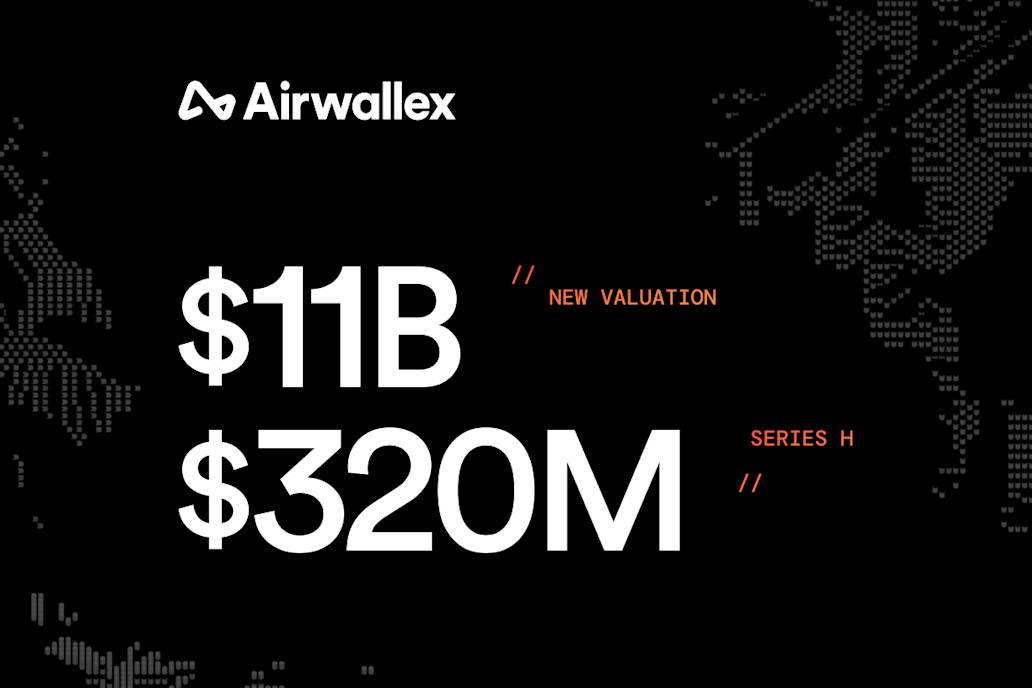
Raised a $320M round on Jun 25, 2026, bringing the total raised amount to $2B.
Returns Calculator
A $10,000 investment at Series C round (2019) would today be worth:
$110,000
11×the original amount
Illustrative · based on reported post-money valuations
Top posts
Harry Stebbings
@HarryStebbings
I could do some bland fundraising congrats tweet for Airwallex and Jack Zhang today with their raising $320M at an $11BN valuation. But I am not going to. The reason I love doing 20VC is because I learn from the smartest minds in the world and they often become friends. @awxjack is a big brother to me, a dear friend, a permanent fixture at every birthday party of mine and a firm favourite of my mother. Jack, I am so proud of you and the team today. This is just the start. LFG. ❤️
Keith Rabois
@rabois
1/ Cool growth chart. Have you disclosed to US customers like @Rippling, @Billcom, @TheZipHyouQ, @brexHQ, and @Navan that you’re quietly sending their customers’ data to China? Airwallex has become a Chinese backdoor into sensitive American data like from AI labs and defense contractors. You must already know this, but your China-based ops, infra, and investors create legal obligations to assist with CCP espionage upon request. Through Airwallex, Beijing can access: •supplier payments for AI labs •payroll data for defense contractors •personal data for employees abroad Obviously many companies do business in China, and that’s not inherently a bad thing. But your company has become a guaranteed vector for data transfer to the Chinese government, and that’s a different thing entirely. You have multiple points of vulnerability: > people (key execs and core engineering team is based in mainland China, which obligates these individuals to comply with Chinese government demands to hand over data) > legal structure (company leaders are subject to Chinese national security law) > cap table (over 20% of your company is Chinese-owned, including Tencent, HongShan, and others, which further obligates you to comply with CCP requests). What’s happening: > You route global payments for US companies in critical sectors, without disclosing that you are under Chinese jurisdiction > You moved HQ to Singapore, but your largest operational footprint is in China and hundreds of your engineers in mainland China touch production payment systems > You are subject to Chinese law that requires Airwallex employees to support CCP intelligence requests and quietly hand over data when asked > You hide this from your customers, but you are well aware of your obligations to China and that is why you insist on protection of Chinese data access in your contracts Thanks to you, the Chinese government now has direct, covert, legally enforceable access to sensitive financial information belonging to America’s AI labs, defense contractors, financial institutions, healthcare firms, and Fortune 500s. Maybe this wasn’t your intent when you started the company, but it’s clear you’ve allowed this to happen.
Simon Taylor
@sytaylor
Airwallex just raised $330M at an $8B valuation. The numbers first: - $1B+ annualized revenue (up 90% YoY) - $235B+ in transaction volume - HQ moving from Melbourne to San Francisco This is the biggest B2B payments company most Americans haven't heard of. These are incredible numbers. But there's some social media drama drowning out this success. And ironically now most Americans *have* heard of Airwallex... --- Keith Rabois called them a "Chinese backdoor" into US corporate data. Jack Ma say's we're complying with data residency laws. But that's not the full story. — Rabois raised a legitimate question. China's National Intelligence Law *can* compel companies to assist state intelligence. Airwallex *does* have engineers in Shanghai. Tencent *is* an investor. For companies handling sensitive financial data, jurisdictional risk is worth scrutinizing. — Airwallex's response was equally direct: - US data stored only in US/Singapore - Chinese engineers don't have production data access - SOC2 compliant, independently audited These are verifiable claims. Not PR spin. So why attack Airwallex? My guess? Defending turf of existing portco's — What I think gets lost in the Twitter drama: Airwallex and Stripe (or Brex, or Ramp) aren't really the same product. Stripe is developer-first payments for internet businesses. Airwallex is multi-rail treasury infrastructure for companies operating across borders—the CFO tool for managing 20+ local clearing systems, FX, and cross-border settlement. Different buyer. Different starting place. Sort of different market. Some overlapping products. Especially as Airwallex comes to the US. — The harder industry question: If we apply strict "no offshore engineering" rules to fintech, we'd lose a significant chunk of the global supply chain. Many US fintechs have distributed teams. But if we ignore jurisdictional nuance entirely, we're naive. The real answer is probably boring: auditable code review processes, data residency attestations, third-party verification. Compliance work that doesn't fit in a tweet. — Airwallex is now worth $8B because CFOs at mid-market multinationals care about settlement times and FX spreads. The geopolitical debate is worth having. But don't let that distract you from the business underneath that is executing. Rabois may have given Airwallex great free marketing by taking a shot.
Jeff Kauflin
@JeffKauflin
NEW: Airwallex found a niche helping global businesses with cross-border payments. Now its CEO Jack Zhang is a billionaire, and he wants to take on Stripe and Ramp: https://t.co/fZDHpudS7f
Dan Kim
@dankimxyz
I’m joining @Airwallex. Here’s why. TLDR: I'm joining Airwallex to connect programmable money and AI agents to the infrastructure that makes them work for global businesses. When I joined Coinbase five years ago, money was starting to become programmable in a way the traditional financial system was never designed for. Stablecoins were one way we worked on that problem: a dollar, in digital form, could move across blockchain rails, settle quickly, and show up inside a product instead of sitting behind a bank login, card form, or checkout page. With USDC, developers had a dollar they could actually build around, one that moved more like software than a bank transfer. Base, the Layer 2 blockchain, made more of those applications practical. And x402, an open standard I helped bring to the Linux Foundation, took the idea into the web itself: if software can request data, compute, or access to a service, payments should also be able to move in the same way. AI agents make this impossible to ignore. If software can discover what it needs, negotiate access, pay for an API call, buy data, or trigger work inside another product, the payment flow cannot depend on a human sitting in the middle of it. But removing the human from the payment flow does not remove the work a business has to do around the money: a company can receive a USDC payment instantly and still need to pay a supplier in pesos, reconcile revenue in its ERP, satisfy a regulator, or get money into an account its finance team already uses. Getting the money there is one problem; making it usable once it arrives is a different one. For agents to handle payments reliably, the business infrastructure around the payment has to already be in place. Airwallex has spent 10 years building the infrastructure global companies need for exactly this kind of problem: direct licenses across dozens of markets, local payment networks across 120+ countries, and FX infrastructure built to move money without the intermediaries that eat into it. Earning those licenses takes years and has to happen market by market, and FX only looks simple until a customer starts asking why margin disappeared between collection and settlement. These are requirements for pushing programmable money toward real commercial use. Airwallex went straight at all of them, and built something that lets businesses move money globally without rebuilding their banking setup every time they enter a new market. A lot of software companies, marketplaces, and AI teams are going to run into this earlier than they expect. A team starts with an agent that can initiate a payment and then discovers that the payment itself was the easy part; the harder questions are where the money lands, what currency it arrives in, who is allowed to move it, and whether the counterparty can actually receive it. That’s why I’m joining Airwallex. If you’re building AI agents, agentic commerce, or software for companies operating across markets, we should talk.
Sam Vinograd
@sam_vinograd
Personal update: I’m joining @airwallex as their first US head of corporate affairs. Ever since walking into the U.S. Treasury Department in 2007, I have spent my career - in government and out - driving policy that advances national security.
Hiring Signal
Based on public job postings · updated monthly
Latest news
Airwallex hits $11 billion valuation with $320 million raise as fintech pushes into finance run by AI agents

How This New Fintech Billionaire Is Cashing In On Cross-Border Payments

Airwallex launches billing product as $8 billion fintech continues to compete with rival Stripe
Public companies tied to Airwallex
About Airwallex
Airwallex is a global financial platform that provides cross-border payments and business banking infrastructure for companies, including global accounts, foreign exchange, corporate cards, and spend management across roughly 200 countries. Founded in Melbourne in 2015, it now runs dual global headquarters in San Francisco and Singapore and processes hundreds of billions of dollars in annualized transaction volume. As of mid-2026 it positions itself as an AI-native financial operating system, pushing into autonomous finance and agentic commerce.
Airwallex on video


Founders
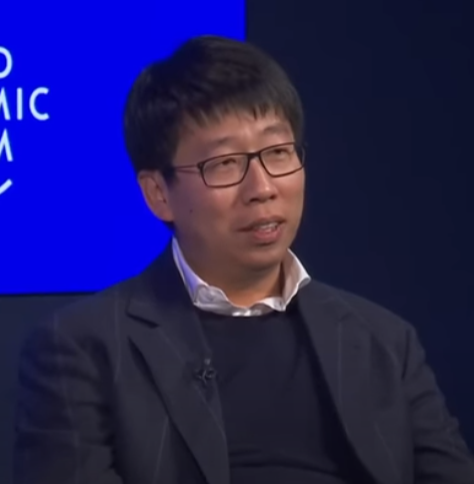
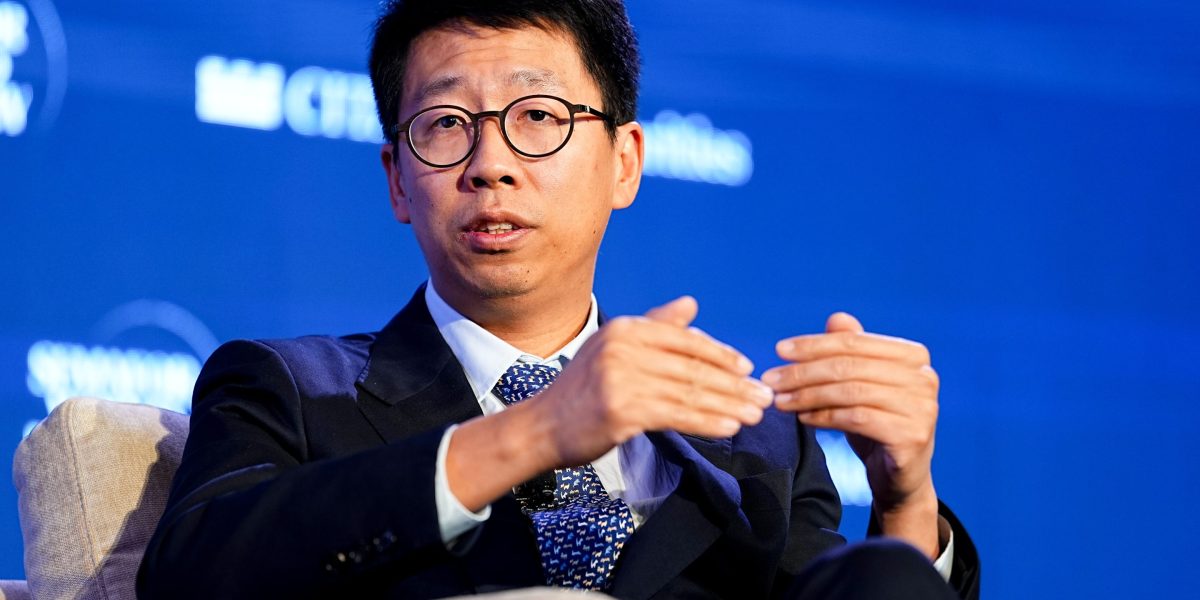
Jack Zhang
Co-founder & CEO
Software engineer who moved from Qingdao, China to Melbourne at 15; co-founded Airwallex in 2015 after cross-border payment costs frustrated a Melbourne coffee shop he backed. Now CEO and its largest founder-shareholder.
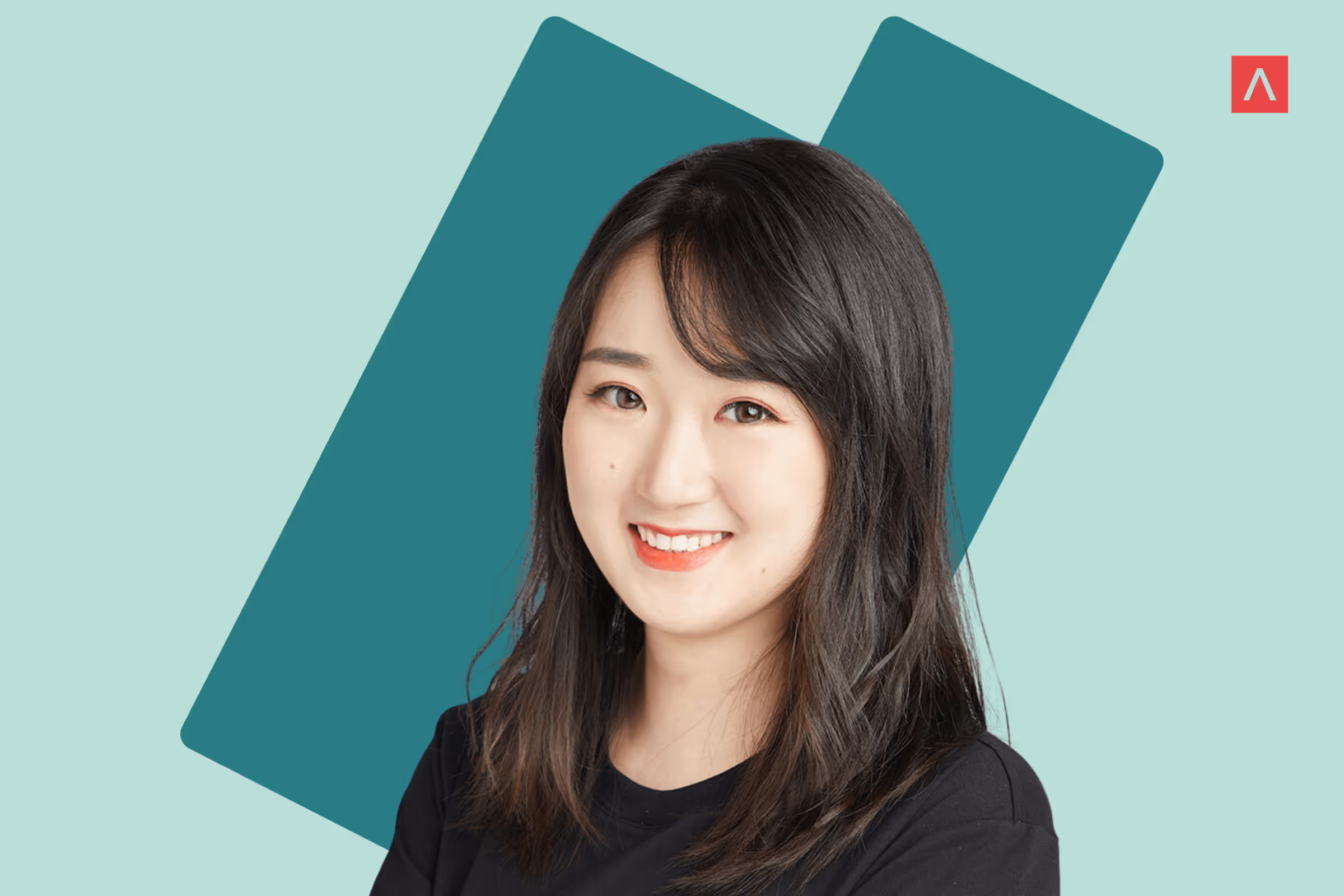
Lucy Yueting Liu
Co-founder & President
University of Melbourne finance graduate and former China International Capital Corporation consultant who wrote a US$1M cheque to bootstrap Airwallex, becoming co-founder and later President in 2018. Widely reported as New Zealand's richest woman.
Xijing Dai
Co-founder & CTO
Met Jack Zhang while studying computer science at the University of Melbourne; joined to build and lead Airwallex's core technology stack.
Max Li
Co-founder & Head of Design
Architect who co-invested with Jack Zhang in the Melbourne coffee shop whose payment pains inspired Airwallex; leads design.
Ki-Lok Wong
Co-founder & Principal Architect
University of Melbourne alumnus who joined the founding team as principal architect of Airwallex's platform.
Key leaders
Recent hires
Pranav Sood
Chief Financial Officer
Previously at Bain Capital Growth · London
Joined Jun 2026
Carolyn Renzin
Chief Regulatory and Compliance Officer
New York
Joined Apr 2026
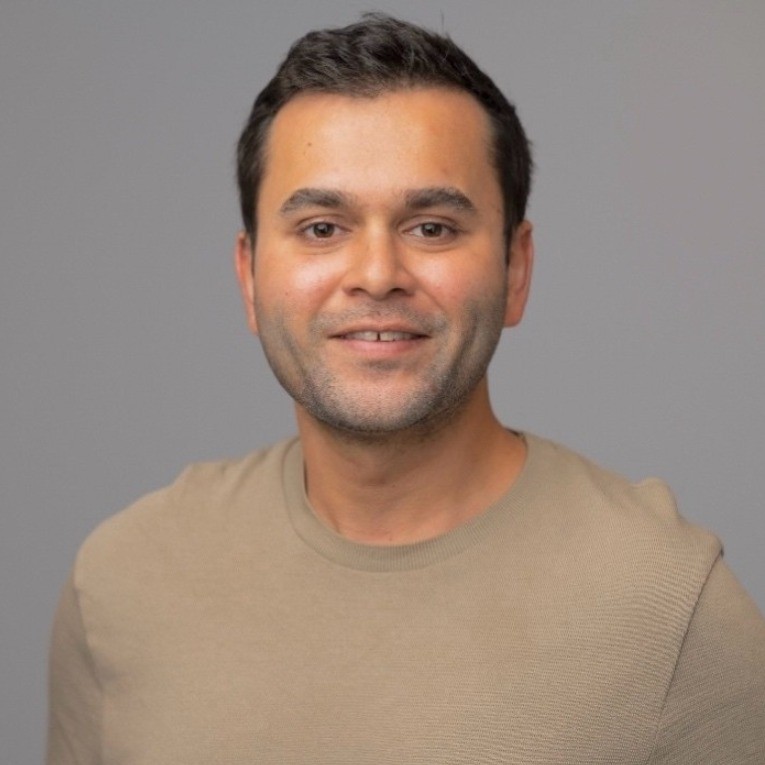
Rishin Shah
Senior Manager, Strategic Partnerships
Previously at Coinbase · New York, New York, United States
Joined Jun 2026
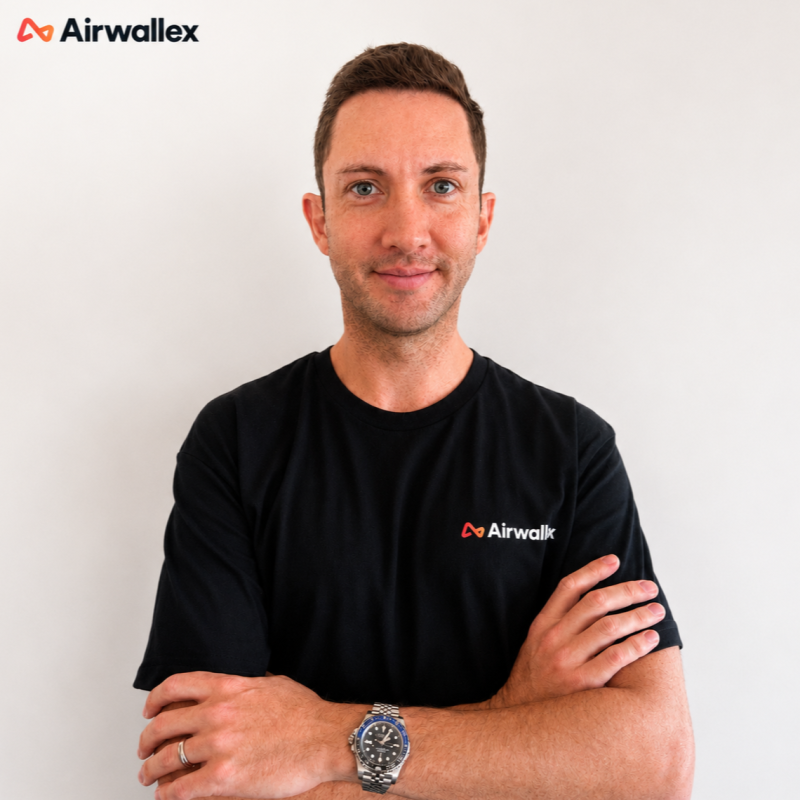
Nick Martinez
Associate Director, GTM Partnerships, ANZ
Previously at Employment Hero · Sydney, New South Wales, Australia
Joined May 2026

Berend Raadschilders
Director of GTM & Ecosystem Partnerships
Previously at Google · Amsterdam, North Holland, Netherlands
Joined May 2026

Sally Bruce
Non Executive Director Airwallex (SVF)
Previously at Skill Path Australia · Greater Melbourne Area
Joined May 2026