Ascend Elements#85
About
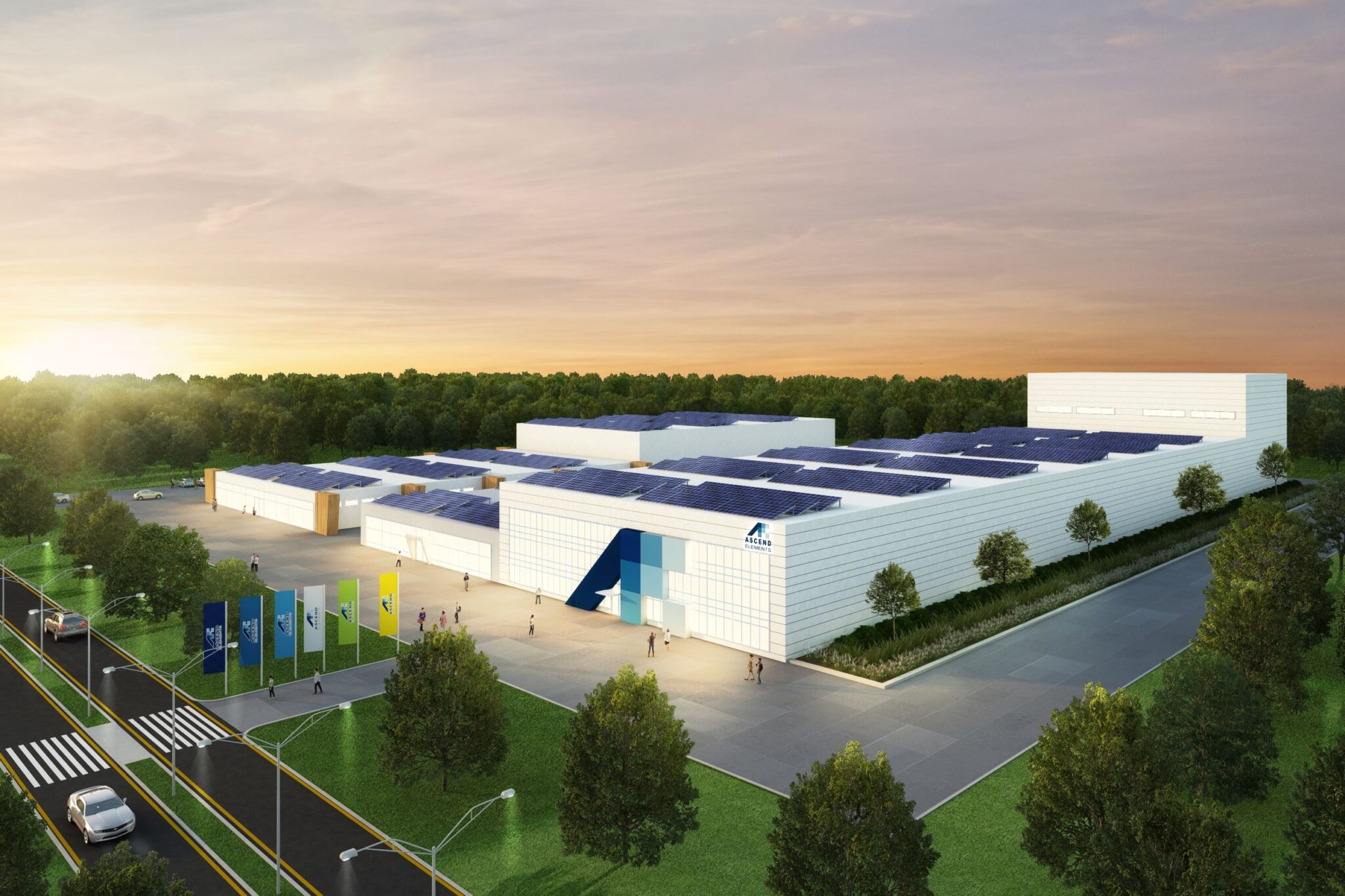
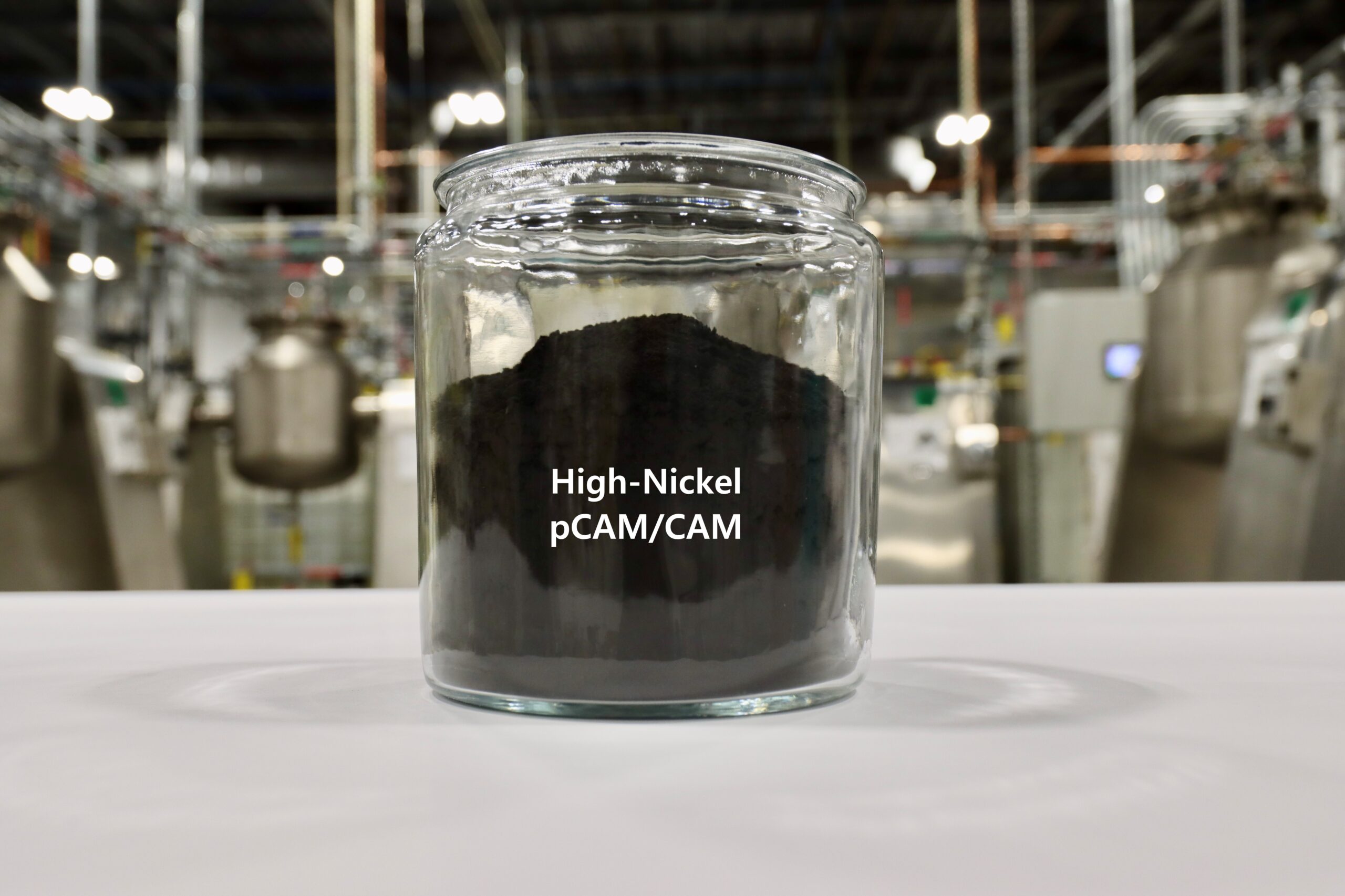
Ascend Elements is a U.S. manufacturer of sustainable lithium-ion battery materials that uses its patented Hydro-to-Cathode direct precursor synthesis to recycle end-of-life EV batteries and production scrap into new cathode precursor (pCAM) and lithium carbonate. The company filed for Chapter 11 bankruptcy protection in April 2026 after a federal grant was canceled.
From X
"Battery Recycler Ascend Elements Files for Bankruptcy" https://t.co/PJX9pfElvG "The climate tech company boomed during the Biden years but has struggled amid a drop in EV interest." https://t.co/BfKGmSNbZ7
For anyone who has been following the lithium-ion recycling sector as long as I have, one of the truths about the industry became very clear around 2023. Many companies built for future demand, which is standard in almost any other business. But for a sector reliant on the price of just a few commodities, this approach was a recipe for failure. That is what Li-Cycle did. Instead of designing for future feedstock while building for the current availability, they tried to create a monopoly before the sector had even matured. This led them to waste resources on expansion of the black mass segment of their business, which was truly reckless, instead of focusing on improving that black mass platform and completing the necessary work to incorporate a battery-grade component. The few companies that made it out of this were those that scaled back, focused on the available feedstock, and shifted resources to R&D. The main contenders right now for most of the market when it comes to feedstock, Ascend Elements and Redwood Materials, did exactly this. Redwood even backed away from a $1 billion loan from the DOE to ensure they did not end up in the same situation as Li-Cycle. There is also a misunderstanding that lithium is the first and last decider, when it is the transition metals that will be the determining factor for at least the next five years. Lithium was historically a low-value metal, and even during the lithium price spike it was still treated as such, with most recyclers unwilling to go through the effort of recovering it from the slag. For now, lithium-ion recyclers will make a nominal profit from lithium, considering it makes up only 3-5% of the battery metals in the cathode. It will be nickel, cobalt, and even copper that will drive profitability. Lithium will not be the true decider until LFP becomes a more dominant chemistry outside of Chinese manufacturers, and the end-of-life feed stock represents this. This is why any rally associated with lithium is just that a rally and has very little to do with the underlying market. Attributing the success of lithium-ion recycler over the next five years primarily to the price of lithium demonstrates how little someone understands the sector.
Around 1am this morning a link to a LinkedIn post was shared in a chat I am in, and it reminded me of when former @AscendElements CEO Michael O’Kronley was part of a panel moderated by Renata Arsenault. He was asked a question about production scrap and launched into a rather nonsensical explanation that scrap was a closed loop and end of life was an open loop. The reaction of the other panelists was telling, one became very interested in something at his feet and the other had a completely confused look on his face. What Michael was trying to explain was a closed and open system for feedstock, but it was a train wreck, using common industry terms completely out of context. This was not the first time I had watched a video of Michael or read an interview that made me wonder about his competency. In fact I put him in the same bucket as another CEO who once said they planned to refine lithium ore into spodumene at a location next to a children’s gymnasium. How can you lead a company if you don’t even understand the most fundamental aspects of what they do. So when I opened and read the LinkedIn post from Ascend Elements CEO Linh Austin announcing a Chapter 11 filing and pointing to the actions of former leadership as a primary contributor, I was not surprised. Also every company filing for Chapter 11 seems to want to toss someone under the bus, but in this case I am more than willing to accept that explanation. There is a lot more context to work through, but first, this is not a liquidation. Chapter 11 is a restructuring that allows a company to consolidate debt and work with creditors to avoid liquidation. The outcome depends heavily on the company. For retailers like Toys R Us and Sears it proved to be a slow path to the end, while for airlines like United and Delta and even auto manufacturers like GM it was a genuine reset that returned value to investors. Before Michael left Ascend Elements I made the point that lithium companies with leadership drawn from tech and academic backgrounds needed to be replaced with seasoned executives, and that the energy, oil, and gas industries were the most compatible with the large scale projects being proposed by these companies. Ascend Elements did exactly that a few weeks later by bringing on Linh Austin, whose background reinforced my opinion on why he was the right choice to transition the company from an R&D entity with limited operations into a full commercial scale corporation. I will be rolling this story around in my head and sorting out the timeline for a few days and plan to reach out to the company to get a more complete picture of what this all means going forward for Ascend. https://t.co/iiuHDZAuz8
Riding on a de-Sinicization narrative, 🇺🇸 Ascend Elements (AE) — which raised $1.1 billion through PPT pitches and secured $480 million in government subsidies — has filed for bankruptcy. The photo shows its supply agreement with 🇯🇵 HONDA signed on April 6, 2023 ⬇️ https://t.co/VrzAjnSACS
Georgia recycler to be first U.S. supplier of key EV battery component Ascend Elements in Covington announced it will become the first U.S. company to sell lithium carbonate that was refined from EV batteries https://t.co/b0y91cd2Il
AE Elemental has opened a electric car battery recycling plant in Zawiercie, Poland - a joint venture between US company Ascend Elements and the Polish company Elemental Strategic Metals . The plant can process 12,000 tonnes of used lithium-ion batteries per year – which corresponds to around 28,000 electric cars. The company will also build an even larger recycling plant in Germany, with an annual capacity of 25,000 tonnes or around 58,000 electric car batteries. A location has yet to be announced.
News

Polls
Will Ascend Elements emerge from Chapter 11 as a going concern?