
Fireblocks
Top 100
Illustrative curve — no price history on file for this company.
Funding
Raised a $550M round on Jan 27, 2022, bringing the total raised amount to $1B.
Returns Calculator
A $10,000 investment at Series E round (2022) would today be worth:
$10,000
1×the original amount
Illustrative · based on reported post-money valuations
Top posts
Đecentralized Člub ©
@dens_club
🚨 COMPRESSED MULTIPLES IN CASH FLOW NAMES $AAVE — 4–7x $LDO — 2–4x $CAKE — 1–3x $RAY — 2–4x $AERO — 3–5x $JUP — 4–7x $ETHFI — 4–7x $SKY — 3–6x $MORPHO — 3–6x $ONDO — 5–8x $COTI — 5–9x $INJ — 6–10x Aave TVL sits near $14.5B against a market cap that implies a 4.5x trailing revenue multiple on annualized protocol take, well below historical DeFi lending averages and TradFi lending comps. Lido maintains $17.8B TVL at 0.18x mcap/TVL with liquid staking revenue still accruing while the token trades at a 2–4x multiple on retained fees. PancakeSwap and Raydium continue printing DEX fees at 1–3x and 2–4x trailing revenue respectively, levels last seen in deep drawdowns. Aerodrome and Jupiter post Base and Solana volume that keeps mcap/TVL and revenue multiples in the low single digits despite sustained institutional DEX flow. Morpho holds $7.6B+ TVL with documented integrations from Robinhood Earn, Fireblocks, and multiple custodians yet trades at a sub-0.2x mcap/TVL. Ondo’s RWA AUM expansion and COTI’s $200M volume day on privacy-portal transfers sit against still-compressed valuations relative to on-chain transaction throughput and peer infrastructure multiples. Injective’s Korean enterprise deployments add measured institutional usage that the current multiple has not absorbed. Still adding only on weakness. Position size stays conservative. DYOR NFA #DeFi #OnchainRevenue #Institutional #RWA
Eila
@EternalEila
The silent infrastructure war that will define AI × Crypto just went nuclear In the last 6 months every major player shipped “agentic wallets”: Coinbase - Phantom - OKX - Binance - Fireblocks - MetaMask - Ledger This isn’t about keys It’s about bounded autonomy The real product isn’t letting agents spend freely It’s building control layers that survive when agents inevitably get compromised Policy enforcement vs hardware enforcement is now the defining strategic fork Founders still treating agents like simple tools are building on sand The ones designing for bounded autonomy with simulation - spending caps - TEE - MPC and physical approval are building the actual future Learn these primitives now The next billion-dollar crypto companies will be built on top of them
DeFi Andree
@DeFi_Andree
Morpho × Fireblocks × Galaxy | Bringing Institutional Liquidity into Onchain Lending Institutional capital does not lack demand for DeFi yield. What has been missing is a stack secure, transparent, and operationally efficient enough to bring that capital onchain ---------- > @FireblocksHQ is the access layer: providing wallet infrastructure, transaction signing, policy controls, whitelisting, and approval workflows > @galaxyhq is the risk layer: curating markets, assessing collateral, setting exposure caps, and managing allocation across each vault > @Morpho is the execution layer: providing the vaults, lending markets, accounting, interest accrual, and liquidation mechanics onchain From a capital-flow perspective, institutions deploy $USDC, solana:Es9vMFrzaCERmJfrF4H2FYD4KCoNkY11McCe8BenwNYB, or $WETH through Fireblocks into Galaxy-curated vaults built on Morpho. Galaxy does not custody the assets; it defines the risk mandate and determines which markets each vault is allowed to allocate capital to On the borrower side, users post approved collateral to access liquidity. Borrow interest accrues within the lending markets and is reflected back into the vault as yield for depositors ---------- ➥ The real value of this stack is not simply the creation of another yield-bearing vault. It is the standardization of how institutional capital accesses onchain credit.
Chain INK
@0xchainink
$RE : Review 📜 What if there were a yield in crypto that did not care what Bitcoin did today, or this quarter, or all year? Meet Re Protocol, an onchain reinsurance marketplace where the returns come from insurance premiums on real policies covering real people, collected through licensed carriers. Not trading fees, emissions or leverage. A $510 million underwriting portfolio spanning 48 programs across 49 US states, paying a yield structurally uncorrelated to the market that funds it. Let's explore what happens when one of finance's oldest businesses moves onchain. 👇 ⚪ Re Protocol at a Glance Marketplace Insight: reinsurance is a roughly $1 trillion market that has been effectively closed to anyone without an institutional balance sheet, and it is one of the few places in finance where returns genuinely do not track equity or crypto cycles. Re has built the bridge into it, with a licensed Cayman carrier in the loop and $409 million of premiums already written. The clean contrast is that the same feature making this attractive, exposure to real underwriting risk, is exactly what makes it a genuine insurance business rather than a yield wrapper. Premiums arrive whether the market is up or down. So do the claims. ⚪ Mission Re's mission is to open one of the world's largest and most closed financial markets to onchain capital. The argument is that reinsurance runs on trust, paperwork, and relationships, which keeps capital scarce and slow, while blockchain settlement makes collateral and reserves verifiable in real time. The goal is to give capital providers access to uncorrelated insurance yield, and give the reinsurance industry transparent, programmable infrastructure to raise it. 🔵 A Brief History Re was founded in 2022 by Karn Saroya, who arrived with unusually direct domain experience. He had co-founded Cover, a licensed US insurtech brokerage that raised $27 million and underwrote profitably across 5,000 independent agencies before winding down, and earlier founded Stylekick, acquired by Shopify in 2015, with a stint as a consultant at Oliver Wyman in between. The seed round raised $14 million led by Tribe Capital, joined by Framework, Morgan Creek, and reinsurer SiriusPoint. The protocol built quietly for two years. It launched on Avalanche, then migrated to Ethereum as the settlement layer for reUSD and reUSDe, structured a licensed Cayman Class B(iii) reinsurer in Cover Reinsurance SPC, and put in place the Section 114 Trusts and Surplus Notes that qualify as admitted collateral for US reinsurers. The Resilience Foundation was formed to issue and govern the token. 2026 has been the scale year. By May, TVL approached $500 million with a $409 million underwriting portfolio and roughly 4,000 active onchain users. The token generation event came on June 18, opening governance publicly with simultaneous listings across 27 venues, and RE peaked above a dollar two days later. June closed with the portfolio past $510 million and TVL near $560 million, alongside a Certora formal verification audit and a public data API that lets anyone query live yields and reserves. 🔵 Ecosystem Narrative The organizing idea is that insurance capital and onchain capital want the same thing, and the barrier between them is structural rather than technical. ➛ Two-tranche capital structure. reUSD is the senior tranche targeting steadier, lower-risk yield, while reUSDe is the junior tranche absorbing more risk for higher returns, with the carrier's own capital sitting junior to both as a loss buffer. ➛ Yield from real premiums. Returns come from quota-share reinsurance treaties on live policies, not from token emissions or leverage, which is why the yield holds its shape through crypto drawdowns. ➛ The regulatory moat. Cover Reinsurance SPC holds a Cayman Class B(iii) license, and the Section 114 Trust and Surplus Note structures qualify as admitted collateral, an access layer most crypto projects cannot replicate and most reinsurers cannot open to crypto capital. ➛ Verifiable reserves. The Network Firm attests offchain balances daily with read-only account access, published through a Chainlink oracle, with a public REST API exposing live APY, NAV, supply, and premium receivables. ➛ DeFi composability. reUSD and reUSDe integrate across Curve, Pendle, Morpho, and the Ethena ecosystem, making the deposit tokens usable as collateral and yield instruments rather than idle positions. ➛ Institutional controls. Fireblocks custody with multisig and whitelisted addresses, KYC and KYB gating on mint and redemption, role-separated authorization, upgrade timelocks, and emergency procedures. ⚪ Token Utilities $RE is the governance and coordination token of the protocol. ➛ Stake-to-vote governance: holders stake or bond to vote on upgrades, risk parameters, committee structures, and transparency standards. ➛ Governance budgets: directs ecosystem incentives, grants, integrations, and liquidity programs. ➛ Participation staking: stakers active in governance and committee work earn rewards, with bonding and slashing rules defined. ➛ Admissions and standards: governance approves participant frameworks, remediation, and removal for protocol participants. ⚪ Key Features ➛ Real insurance yield from licensed quota-share reinsurance treaties, uncorrelated to crypto markets. ➛ Two-tranche deposit tokens letting depositors choose their risk profile. ➛ A licensed Cayman Class B(iii) carrier with equity junior to protocol capital. ➛ Daily reserve attestation through The Network Firm, published via Chainlink. ➛ Formal verification of core capital-flow contracts by Certora. ➛ A fixed 1B supply with no inflation and no perpetual emissions. 🔵 Meet the Team Re runs a deliberate three-part structure, and spelling it out matters because it shows where the regulated balance sheet sits versus where the token lives. The protocol handles tokenization and governance, the Resilience Foundation issues the token, and Cover Reinsurance SPC is the licensed entity actually writing the business. ▶️ Core Members: ➛ Karn Saroya [ @karnsaroya ] - Co-Founder and CEO | Serial founder with genuine insurance operating history. Co-founded Cover, a licensed US insurtech brokerage backed by Exor and Tribe Capital, and founded Stylekick, acquired by Shopify in 2015, with earlier consulting at Oliver Wyman's financial services division and graduate credentials from MIT. Leads strategy, regulatory positioning, and capital partnerships. ➛ Cliff White [ @thecliffwhite ] - Co-Founder and VP Engineering | Former CTO at Kiteworks, an enterprise content and communications platform. Runs engineering across smart contracts, custody integrations, and the deposit token stack. ➛ Anand Dhillon [ @AnandDhillon ] - Co-Founder | Previously CTO and co-founder at Cover alongside Saroya, bringing the technical and insurance product experience directly into Re's architecture. ➛ Ben Aneesh [ @benaneesh ] - Co-Founder | Founding team member contributing across operations and product roadmap. ➛ St3ph [ @st3phdoteth ] - Marketing | Runs Re's marketing and community presence, and is one of the most reachable people in the ecosystem, consistently first to answer a question in the channels and quick to help newcomers make sense of a genuinely complicated product. Reinsurance is not an easy thing to explain to crypto, and the fact that so much of the community understands the tranche structure at all is downstream of that work ethic. ➛ "Re Intern" - Intern | Contributes across community and content under the Re Intern handle, a steady presence in the day-to-day of the ecosystem's channels. ➛ Resilience Foundation | The Cayman foundation company that issues the token and oversees governance scope, participation requirements, and token economics. ➛ Cover Reinsurance SPC | The load-bearing entity. A Cayman Class B(iii) licensed exempted segregated portfolio company that holds the licensed admissions, manages carrier relationships, and places its own equity junior to protocol capital. 🔵 Ratings ➛ Use Case: ★★★★⯪ (4.5/5). Re is one of the few RWA protocols moving serious capital into a real operating business rather than tokenizing government debt. Roughly $560M TVL, a $510M underwriting portfolio across 48 programs and 49 states, $409M in premiums since inception, over a million policyholders reinsured, and 30-plus insurance partners. The licensed carrier structure is a genuine moat, and the yield is structurally uncorrelated to crypto, which almost no other real-yield product can honestly claim. The 0.5-point deduction is that reinsurance is an underwriting business, so a severe catastrophe year would hit the book directly, and the protocol is still early in scale against a roughly $1 trillion market. ➛ Tokenomics: ★★★★ (4/5). The structure is genuinely disciplined for a 2026 launch: 1B fixed supply, no ongoing inflation, no perpetual emissions, and an allocation covering staking, governance, liquidity, grants, and contributors. Governance utility is live from day one across stake-to-vote, budgets, and admissions control. The 1.5-point deduction is float and timing, which is specific rather than market-wide. Only 16% of supply circulates, so roughly 840M tokens release across a 48-month vest, and fully diluted valuation sits near $600M to $700M against a market cap around a sixth of that. Several governance powers also activate over time rather than at launch, so day-one utility trails the long-term design. ➛ Audits: ★★★★⯪ (4.5/5). Certora conducted a formal verification engagement on the core contracts governing capital flows and redemptions, using mathematical proofs to verify behavior across all possible states, returning zero critical or high-severity findings with all 13 issues remediated and verified. Named formal verification is the higher of the two routes to this tier. Hacken separately performed a smart contract security assessment, The Network Firm attests reserves daily through a Chainlink oracle, and Fireblocks provides institutional custody with multisig and whitelisting. The 0.5-point deduction stays honest even here: the protocol's real exposure spans offchain custody, reserve attestation, and licensed carrier integrity, surfaces no contract proof can cover. ➛ Community: ★★★★ (4/5). A month past TGE, Re has genuine reach, trading across 27 venues including Binance, Coinbase, and Upbit with strong volume, backed by Coinbase Ventures, Tribe Capital, and Electric Capital, and reUSD and reUSDe have pulled real DeFi liquidity through Curve, Pendle, and Morpho. Saroya is a visible and credible operator. The 1-point deduction is the gap between trading interest and participation: roughly 4,000 active onchain users is a small base relative to the exchange volume, and much of the current attention is retail momentum rather than governance engagement, which is still forming. 🔵 Conclusion Re Protocol is doing something structurally rare. It is not wrapping CeFi yield or tokenizing Treasuries, it is running a licensed reinsurance business with onchain capital, and the numbers are auditable: $560 million in TVL, a $510 million underwriting portfolio across 49 states, $409 million in premiums written, and over a million policyholders reinsured. The yield comes from premiums on real policies, the carrier's own equity sits junior to depositor capital, and the core contracts have been formally verified by Certora with zero critical findings. The bull case is unusually concrete. If reinsurance is a trillion-dollar market that has never had an efficient way to raise capital from outside its own club, and Re is the only protocol with a licensed carrier, real premium flow, and institutional-grade verification all in one stack, then the governance token sits on top of a business that generates returns regardless of what crypto does. Re has already built the business. The token's job now is to prove it deserves a claim on it.
Marco Salzmann 🇩🇪🇻🇪 Ħ
@MarcoSalzmann80
🧵Is @hedera quietly becoming part of Wall Street’s tokenization infrastructure? @The_DTCC has been processing live production trades with tokenized assets since July 2026 DTCC has already highlighted technologies such as @CantonNetwork, @StellarOrg and @chainlink as part of its tokenization initiative At the same time, many of the organizations helping build the broader institutional digital asset infrastructure also have established connections to the @hedera ecosystem Here’s why that matters. 👇 DTCC’s Industry Working Group includes many of the world’s leading financial institutions and infrastructure providers, including: • BlackRock • Goldman Sachs • J.P. Morgan • @CMEGroup • @circle • @FireblocksHQ • @BitGo • @chainlink • Linux Foundation Decentralized Trust • Microsoft Each plays a different role in institutional tokenization. Let’s start with @circle Circle participates in DTCC’s tokenization initiative while also issuing native USDC on Hedera As tokenized markets grow, trusted stablecoin infrastructure becomes essential Next comes @FireblocksHQ Fireblocks’ Hedera integration has evolved in stages: • 2020: Native HBAR support • 2025: Hedera EVM support • 2026: Native Hedera Token Service (HTS) support Institutions can now custody and manage Hedera-native assets through Fireblocks’ enterprise-grade MPC infrastructure Then there’s @BitGo. BitGo is both: • a participant in DTCC’s Industry Working Group and • a member of the Hedera Governing Council. BitGo combines institutional custody, treasury infrastructure and decentralized governance within the Hedera ecosystem One of the most overlooked connections is the Linux Foundation Decentralized Trust (LFDT). Hedera donated its complete open-source codebase to LFDT through Project Hiero, becoming the first Layer-1 network to place its core software under a vendor-neutral open-source foundation. DTCC’s broader tokenization ecosystem also includes technologies developed within the Linux Foundation ecosystem. Institutional markets also require trusted pricing infrastructure That’s where @CMEGroup comes in CME now publishes the official HBAR Reference Rate and Real-Time Index, providing regulated pricing infrastructure for institutional markets. Interoperability is another essential building block. Hedera has adopted @chainlink CCIP as its cross-chain interoperability standard, enabling secure communication across blockchain ecosystems. As tokenized markets become multi-chain, interoperability becomes essential That vision extends even further through @OwneraIO. Since December 2025, the Hedera Foundation has partnered with Ownera, integrating Hedera into its institutional interoperability platform Ownera enables financial institutions to connect, trade and settle assets across multiple blockchain networks This aligns closely with DTCC’s long-term vision. At HederaCon 2026, DTCC Digital Assets Global Head Nadine Chakar said tokenized markets will aggregate multiple Layer-1 and Layer-2 networks rather than rely on a single blockchain The direction is clear: Interoperability, not isolation. None of these connections alone prove that DTCC’s commercial Tokenization Service will operate on @hedera. That would be speculation. However, they do highlight an interesting pattern. Circle. Fireblocks. BitGo. CME Group. Chainlink. Linux Foundation. Ownera. These organizations continue to intersect with the Hedera ecosystem while helping build institutional digital asset infrastructure. The biggest story may not be which blockchain wins It may be which ecosystems quietly become part of the infrastructure institutions choose to build around Institutional adoption isn’t driven by a single technology It’s driven by the convergence of custody, pricing, interoperability, governance, compliance, stablecoins and settlement Looking at that broader picture, Hedera continues to position itself where many of those infrastructure layers intersect
Bittopia
@Bittopia_
GN X-Communities 🏦 TOKENIZED DEPOSITS ARE NOT JUST “BANK STABLECOINS” Fireblocks has published a new inter-bank tokenized-deposit model with Cari Network, building on a pilot involving five US regional banks. The distinction matters. A tokenized deposit remains a claim on the issuing bank. It sits inside the bank’s regulated balance sheet and customer-onboarding perimeter. A public stablecoin is normally a claim on a separate issuer and can circulate across a broader network. The difficult part is therefore not creating a token. It is enabling Bank A’s digital deposit to settle with Bank B while preserving redemption, compliance, accounting and finality. That is where the next banking infrastructure race may be decided: interoperability between regulated balance sheets. @FireblocksHQ #TokenizedDeposits #DigitalBanking #PaymentsInfrastructure ⚠️ Industry analysis only. The July publication describes a model and pilot context, not a retail product, deposit offer or investment opportunity.
Hiring Signal
Based on public job postings · updated monthly
Latest news
Public companies tied to Fireblocks
About Fireblocks
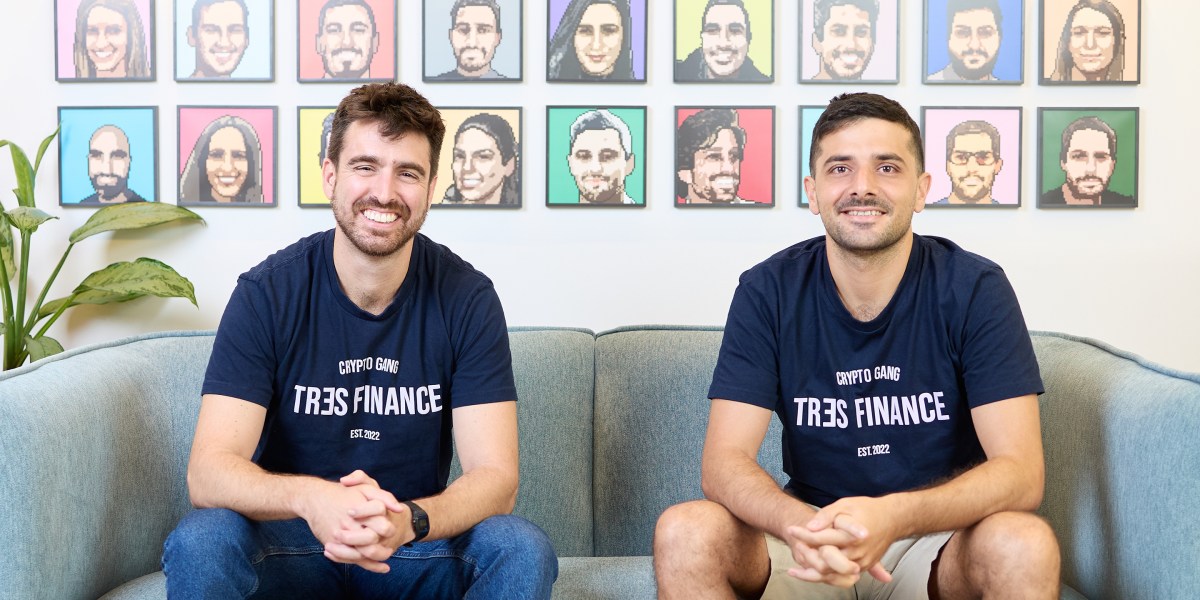
Fireblocks is a digital-asset infrastructure platform that gives banks, fintechs, and enterprises secure custody, transfer, and settlement of crypto and stablecoins, using MPC (multi-party computation) technology to protect private keys. Founded in 2018 by Michael Shaulov, Idan Ofrat, and Pavel Berengoltz, it now powers 2,400+ financial institutions and has expanded from custody into tokenization, embedded wallets, and stablecoin payments infrastructure. In 2025-2026 it acquired Dynamic and TRES and became the core infrastructure behind stablecoin programs such as Western Union's USDPT.
Fireblocks on video


Founders

Michael Shaulov
CEO & Co-Founder
Co-founder and CEO of Fireblocks. Previously co-founded mobile security firm Lacoon Mobile Security (acquired by Check Point in 2015) and led mobile and cloud security products at Check Point; served in the IDF's elite Unit 8200.

Idan Ofrat
Chief Product Officer & Co-Founder
Co-founder and Chief Product Officer of Fireblocks. Comes from a software-engineering and cybersecurity background and leads the company's product organization building institutional digital-asset and payments infrastructure.

Pavel Berengoltz
CTO & Co-Founder
Co-founder and CTO of Fireblocks. An early employee at Lacoon Mobile Security with deep fintech and cybersecurity engineering experience; he leads Fireblocks' R&D and platform engineering.