
The Boring Company
Top 100
Illustrative curve — no price history on file for this company.
Funding
Raised a $675M round on Apr 20, 2022, bringing the total raised amount to $908M.
Returns Calculator
A $10,000 investment at Series A round (2019) would today be worth:
$61,685
6.2×the original amount
Illustrative · based on reported post-money valuations
Top posts
Sawyer Merritt
@SawyerMerritt
NEWS: Elon Musk's @boringcompany received approval today from the Tennessee DOT to officially begin construction on the Music City Loop tunnel in Nashville! • 100% privately funded • Only @Tesla vehicles will be used in the tunnels • Will connect downtown & the Convention Center to Nashville International Airport • Transit time of ~8 minutes • Tunnels will result in the removal of thousands of vehicles daily from roadways and state highways, easing congestion • Will be capable of moving thousands of people per hour with predictable transit times • Expansion: Possibilities include additional communities and 40+ stations following the initial route • Construction will be immediately “The Music City Loop shows what’s possible when we leverage private-sector innovation and American ingenuity to solve transportation challenges,” said U.S. Transportation Secretary Sean Duffy. “TDOT’s lease approval will help advance this ambitious project as we work to reduce congestion and make travel more seamless for the American people. Congratulations to Governor Lee, the City of Nashville, and The Boring Company on this significant step toward a faster, more efficient transportation future.”
Aakash Gupta
@aakashgupta
The real story is the $25 million per mile price tag they’re betting on. Nashville’s own 2018 light rail plan priced at $200 million per mile. New York’s East Side Access cost $3.5 billion per mile. The LA Metro expansion is running $1 billion per mile. The Boring Company says it can build 13 miles of twin tunnels through Nashville for $240-300 million total. That’s a 95% cost reduction from the industry average. If the number holds, it rewrites the economics of every transit project in America. If it doesn’t, a few hundred million in private capital evaporates and taxpayers lose nothing. That risk asymmetry explains why Tennessee said yes when LA, Chicago, Baltimore, and DC all said no. The engineering gamble is wild. 12-foot diameter tunnels instead of 28-foot. Fully electric Prufrock machines that mine continuously instead of stopping every 5 feet to install lining segments. Zero people in the tunnel during operations. A machine that “porpoises” into the ground from a truck instead of requiring million-dollar launch pits and cranes. Every one of those innovations has worked in Las Vegas sand. None have been tested in karst limestone, the geology that creates sinkholes, caves, and underground streams. Their own CEO said at the unveiling that Nashville would not be their choice if they were optimizing for easiest places to tunnel. This tells you everything about what The Boring Company is actually trying to prove. Nashville is where the thesis meets the hardest possible geology. 50 inches of annual rainfall versus Vegas’s 4. Rock that creates underground caves and streams. They just signed a construction contract in Dubai too, meaning they need Nashville to work before the next project launches. The internal memo from the governor’s office estimates 1 mile per month. The Boring Company’s website claims 1 mile per week. That 4x gap between political planning and corporate marketing will determine whether this finishes in 2027 or 2030. Week 7, when Prufrock-MB2 arrives, is when this gets real. Two machines boring simultaneously through Tennessee limestone will answer the question the entire tunneling industry has been debating for a decade: whether a startup can actually outrun the physics that made infrastructure the slowest-moving sector in construction.
Shanaka Anslem Perera ⚡
@shanaka86
Nashville agreed to almost 25 miles of tunnel beneath it and is putting in zero capital. The airport authority collects roughly 343 million dollars in fees. Elon Musk's company carries the construction risk and collects the fares for 50 years. That is what a 20 billion dollar valuation is actually buying, and it has little to do with digging faster. The Boring Company is not being priced as a tunnelling contractor. It is being priced as a bet that venture capital can replace the municipal bond, converting public permission into long private concessions that riders repay. A conventional contractor builds an asset and leaves. This one takes long duration access beneath public and private property, finances construction itself, then collects from passengers for half a century. The boring machine is the engineering moat. The concession is the financial moat. The Wall Street Journal reports talks to raise about 4 billion dollars at roughly 20 billion. Nothing has closed and terms could change. The 2022 round priced the company at 5.675 billion, making this a 3.5 times markup in about four years. The operating base has grown. Vegas Loop reports more than 4 million passengers carried across 11 stations, up from 1.7 miles and three stations at the start, with more tunnels under construction. Dubai is priced at about 154 million dollars for the first four miles. The risks are documented. Nevada regulators alleged nearly 800 environmental violations across roughly two years. Some penalties were paid, some remain contested, and one above 425,000 dollars was withdrawn after errors emerged. Moving construction off a public balance sheet does not move water, workers or emergency response out of the public realm. The timing is the anomaly. This is the highest primary valuation the company has ever sought, negotiated in the same weeks Tesla disclosed a 1.4% operating margin and SpaceX traded near 112 dollars, about 17% below its own offer price and 50% below its June peak. Coincidence is not proof. A thin public float distorts a ticker just as preferred terms distort a private headline. Three markets are pricing three different things. A venture valuation says investors believe the tunnel will work. A public quote says marginal shareholders will hold it today. Project finance says the tunnel can pay for itself. Only the third is a real test and it has not happened yet. The decisive number will not be the headline valuation or a future listing. It will be the interest rate on the first Loop loan a bank will make against the project's own fares, with no recourse to Musk and none to the company's balance sheet. If that loan exists, venture capital has matured into infrastructure and the first city can be refinanced to fund the next. If it never appears, every city needs another corporate round, and zero taxpayer cost only means the public did not finance the tunnel. Belief did. The machine cuts rock. The concession monetises permission. A bank decides whether 20 billion is infrastructure or mythology. The piece works out which of the three prices is the real one. https://t.co/IcF6axpc10
DogeDesigner
@cb_doge
BREAKING: Elon Musk’s The Boring Company is reportedly in talks to raise around $4 billion at a $20 billion valuation, according to WSJ. There is no official confirmation yet from Elon Musk or The Boring Company. https://t.co/pl6SoYfa32
Vinod Khosla
@vkhosla
Solution from @glydways is far superior and much more broadly applicable than from @boringcompany. It is the solution globally that can reduce cars by 50% and be suprior for users than owning a car. Boring company is also a good idea but more niche. Investors should compare both. https://t.co/s8X5OW1Yzs
Exec Sum
@exec_sum
Elon Musk's tunneling startup, The Boring Company, is in talks to raise a $4B round at a $20B valuation The firm was last valued at $5.7B in a 2022 funding round led by Sequoia and Vy Capital https://t.co/lDifm35wtR
Latest news

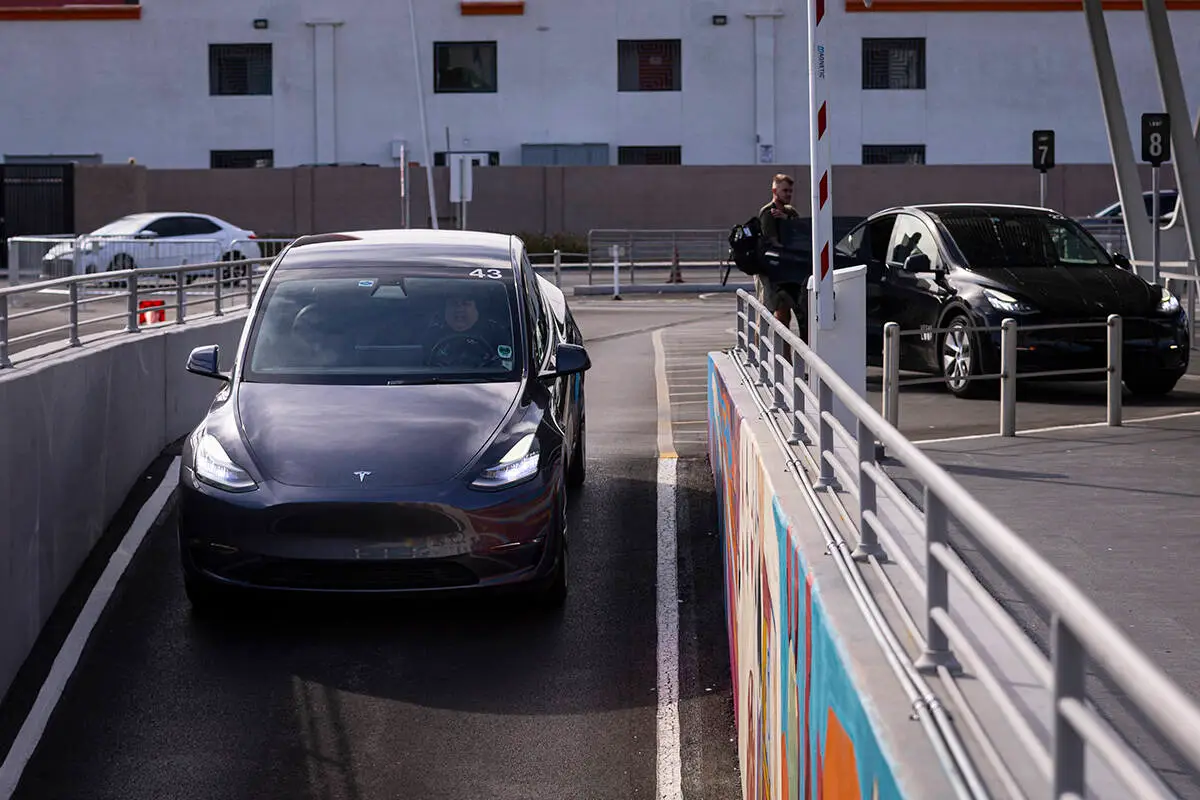
Public companies tied to The Boring Company
About The Boring Company
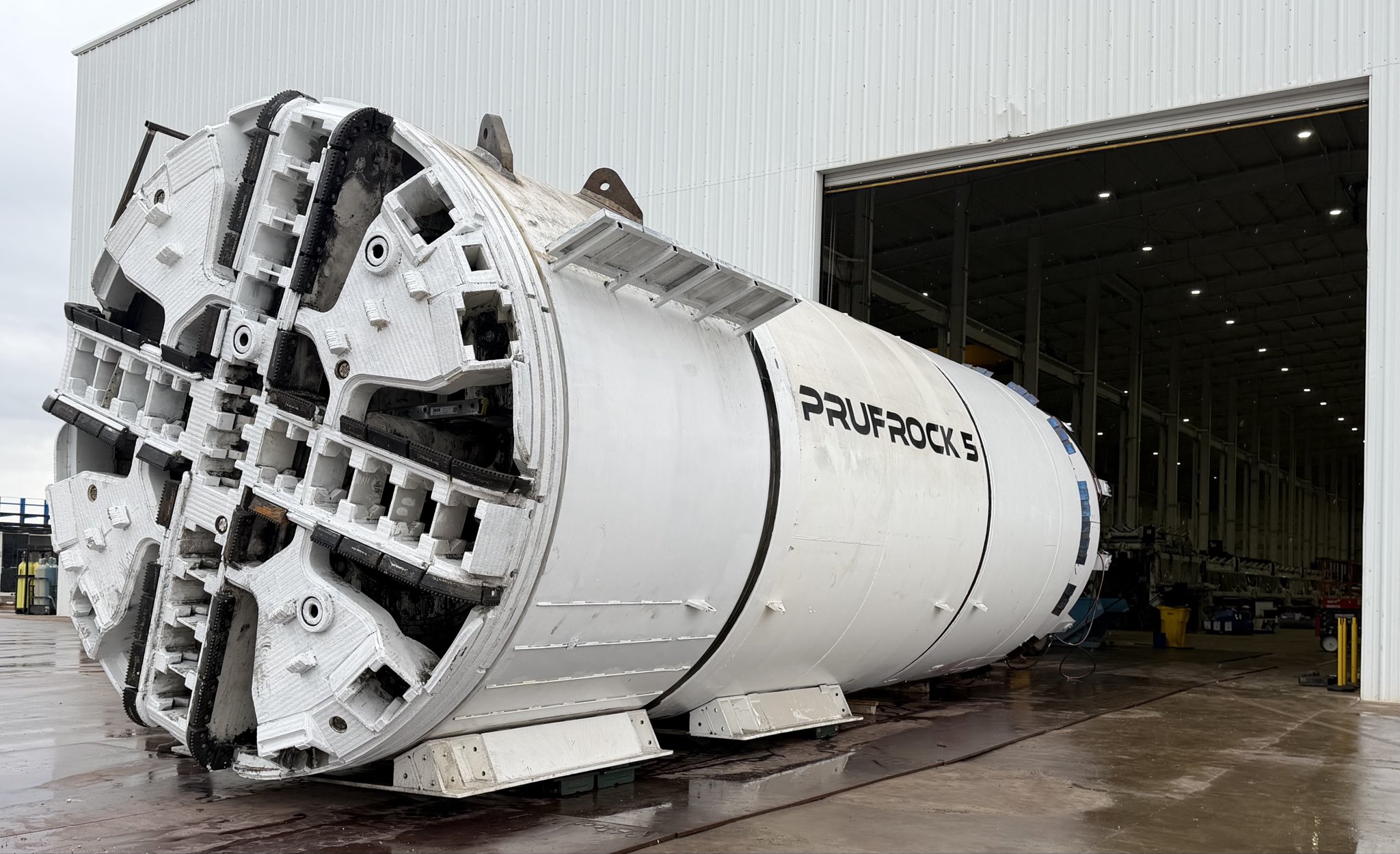
The Boring Company is an American infrastructure and tunnel-construction firm founded by Elon Musk in 2017 to lower the cost of tunneling and build underground transportation. Its flagship project is the Las Vegas Loop, which shuttles passengers in Tesla vehicles through a growing network of tunnels and stations, and it develops the Prufrock tunnel-boring machine. It has not raised a new primary round since its 2022 Series C.
The Boring Company on video
 7:33
7:33Elon Musk & Gayle King test drive Boring Company tunnel
CBS Mornings · Feature
 5:19
5:19Boring Company builds tunnel to transport Teslas
BBC News · Feature
 5:19
5:19Boring Company Wanted to Dig Cities Out of Traffic
The Wall Street Journal · Documentary
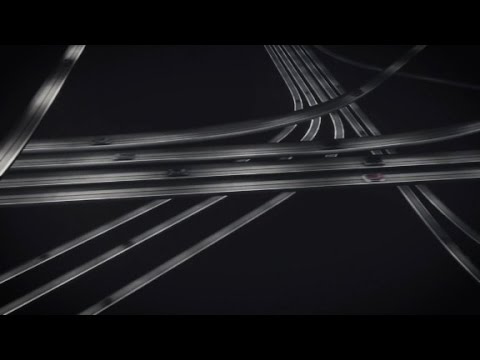 1:01
1:01Elon Musk's Boring Company releases slick video
CNN Business · Feature
Founders
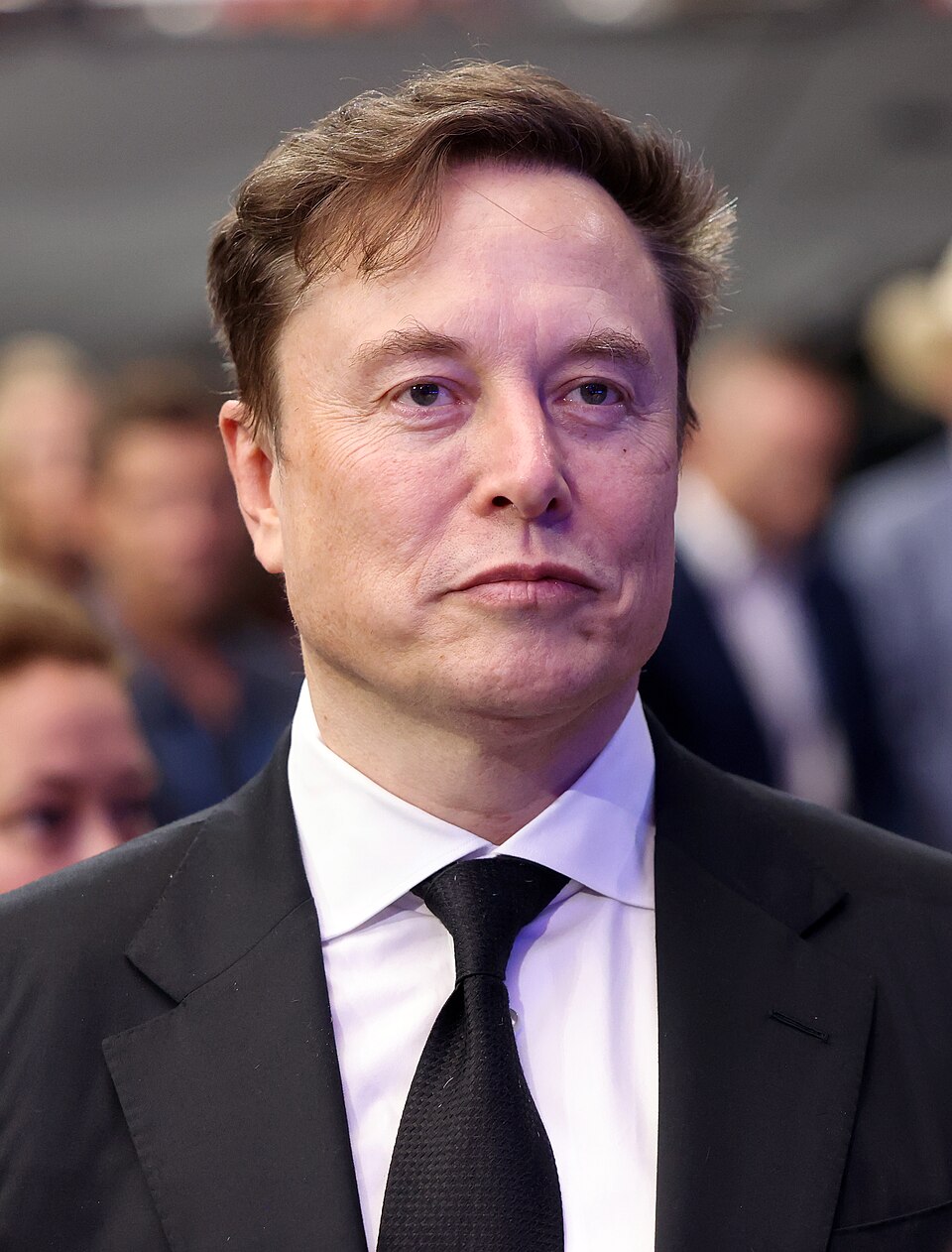
Key leaders
Recent hires
Aundre Sherrick
Electrician
Previously at WebstaurantStore · Gallatin, Tennessee, United States
Joined May 2026

Emar Jay Asaldo
Civil Engineer
Previously at Taslleeh Engineering Solutions · Dubai, United Arab Emirates
Joined May 2026
Jose Trevino
Software Engineering
Previously at Texas A&M University Sounding Rocketry Team (SRT) · College Station, Texas, United States
Joined May 2026

Arthur Zhao
Tunnel Engineer
Previously at Georgia Tech Manufacturing Institute · Durham, North Carolina, United States
Joined May 2026
Razik Khan
Architect
Previously at Binghatti · Dubai, United Arab Emirates
Joined Jun 2026
Vinayak Das
Test and Reliability Engineer
Previously at Genie · Austin, Texas Metropolitan Area
Joined Jan 2026