
KoBold Metals
Top 100
Illustrative curve — no price history on file for this company.
Funding
Raised a $537M round on Jan 2, 2025, bringing the total raised amount to $1B.
Returns Calculator
A $10,000 investment at Series C round (2025) would today be worth:
$14,865
1.5×the original amount
Illustrative · based on reported post-money valuations
Top posts
Maxime Ndayizeye, Ph.D.
@MaxNdayizeye
The Manono Lithium Saga — A Cautionary Tale for U.S. Critical Minerals Strategy in the DRC As America races to secure reliable supplies of lithium for EVs, batteries, and the clean-energy transition, the Manono project in the Democratic Republic of Congo offers both enormous potential and a stark warning. One of the world’s largest hard-rock lithium deposits, Manono is now at the center of a protracted legal and geopolitical dispute that risks handing China a decisive early advantage while complicating U.S.-backed efforts to build transparent, Western-aligned supply chains. Australian junior AVZ Minerals discovered the deposit and secured rights, only to see its exploration permit revoked by the DRC government in 2023. The northern section was reassigned to a joint venture dominated by China’s Zijin Mining (61%) and state-owned Cominière. Zijin is now advancing rapidly, targeting first lithium production in June 2026 with exports to follow immediately. Meanwhile, the southern section remains contested, with U.S.-backed KoBold Metals (backed by investors including Bill Gates) holding a conditional framework agreement to acquire AVZ’s interests and invest over $1 billion — but only once ownership is cleanly resolved. The dispute has escalated into parallel arbitrations. AVZ secured a partial ICC award against Cominière and continues its ICSID investment treaty claim against the DRC (Case No. ARB/23/20). As of March 20, 2026, the ICSID tribunal has been officially reconstituted, signaling that proceedings are resuming after earlier suspensions aimed at settlement talks. No final resolution has emerged, leaving title clouded and KoBold’s southern ambitions stalled. This saga raises serious governance concerns. Reports have highlighted nine red flags in Manono’s nascent lithium sector, including alleged irregularities in state share transfers, opaque beneficial ownership, questionable permit processes, hidden joint-venture contracts, and politically connected deals. These echo familiar patterns from DRC’s copper and cobalt eras, where elite capture and lack of transparency often undermined broad-based development. For U.S. policy, the stakes are clear. Lithium is a foundational critical mineral. China already dominates processing and is moving aggressively upstream in Africa. Allowing Manono’s northern section to feed primarily into Chinese supply chains while the south remains tied up in litigation weakens efforts to diversify away from Beijing’s leverage. The U.S.-DRC strategic minerals partnership — and similar “minerals-for-security” initiatives — must prioritize rule of law, contract sanctity, and transparent title resolution if American investors like KoBold are to deploy capital at scale. A fair settlement that compensates legitimate claims, clarifies ownership, and enables responsible development could unlock thousands of Congolese jobs, generate sustainable revenue for Kinshasa, and deliver ethically sourced lithium to Western markets. Conversely, prolonged uncertainty benefits only those comfortable with opacity. The recent reconstitution of the ICSID tribunal is a procedural step forward, but real progress requires sustained U.S. diplomatic engagement, insistence on strong governance standards, and concrete support for traceable supply chains. Manono is not just another African mining dispute — it is a test of whether the West can compete effectively in the global critical minerals race without repeating the mistakes of the past. The window is narrowing. Washington and Kinshasa should seize it before China’s first lithium from Manono cements a lasting foothold. #Manonolithium #DRC #AVZ #Kobold
KIKI KIENGE
@KiengeKki
ENGLISH VERSION 👇 #Manono_Lithium🇨🇩 Why KoBold Should Not Ignore AVZ in the Manono Lithium Project By Kiki #Kienge The Manono lithium deposit (DRC) is one of the richest in the world. Yet today, some actors are trying to sideline AVZ Minerals, a legitimate stakeholder, in favor of KoBold Metals. A dangerous strategy. Here’s why. AVZ still holds legal rights to the project through Dathcom Mining. Its current exclusion is being challenged in several courts, including at ICSID. Ignoring AVZ = major risk of international litigation. Even if some Congolese authorities are trying to “reallocate” the permit to other partners, that does not eliminate AVZ’s contractual rights. Any new entrant (including KoBold) risks becoming entangled in costly and lengthy legal proceedings. Bypassing AVZ is like building on a legal minefield: international arbitration, regulatory blockages, global media campaigns... No one wants lithium that is “legally tainted.” However, KoBold has a strong and winning alternative: negotiate a deal with AVZ, even if it means compensation between $3 and $5 billion USD. Why is this a good deal? The Manono deposit is exceptionally rich. It contains strategic lithium for decades to come. Its net value far exceeds several tens of billions of dollars. Even after paying AVZ, KoBold would secure a stable, profitable, and legally sound asset. Such a solution would allow KoBold to: Exit the global legal battlefield; Solidify its legitimacy; Uphold ESG principles and transparency; Create a clean and strategic supply chain. But there’s more: the U.S. government is also involved. KoBold is one of the first American investors in a strategic African deposit, originally encouraged by Donald Trump’s policy on critical minerals. If KoBold proceeds in Manono without settling AVZ’s rights, it could: Undermine the Trump initiative in Africa; Expose the U.S. to criticism over governance; Jeopardize one of the few strategic American mining projects in the DRC. The current U.S. administration should set a clear line: No KoBold involvement in Manono without recognition of AVZ’s rights. This would protect American interests and uphold the principles of an ethical partnership with Africa. In short: “It’s better to pay for legality once than to bear the cost of illegality forever.” KoBold and its American partners must choose between a win-win strategy for all… or a global legal battle that will cost far more.
Chibamba Kanyama
@ChibambaKanyam
At the Investing in Zambia event in Chicago last Thursday, Dr. Kurt House, Founder and CEO of KoBold Metals, shared insights on the company’s influence on Zambia’s supply chain. A significant aspect of their approach is the commitment to hiring local contractors, exemplified by their collaboration with Chipembele drilling. While the company brought on skilled drillers who possess a deep understanding of Zambia's mining environment, they faced challenges due to a lack of appropriate drilling equipment. In response, KoBold procured the necessary equipment for its client. This innovative business model aligns perfectly with Zambia’s needs, which is why I actively seek support from the KoBold team for my investment initiatives in the U.S. They have truly excelled in their contributions!
TJ Morris
@tjmorris_bear
Accelerationist Click-Bait Title | Bear Brief 11FEB26 BLUF: I don't give a fuck about politics. --- Medical & Training: https://t.co/whz7wPWbmz Promo Code "Bear Nation" for 10% off everything. Disaster Relief: https://t.co/0RZvudJMmw Returning from Selmer TN ice storms today Refuge Ruckus: https://t.co/Gr9JirBN9G *** I NEED 1,000 OF YOU AT THE RUCKUS *** Countertrafficking: https://t.co/rSQ6eNHOWt Privately funded by you; we do bad shit to bad people and rescue & restore juvenile human trafficking surviviors. We've been doing this since before it was cool... Patreon & Swag: https://t.co/L7ewdUsB4c All the things, all the links, in one place. --- BEAR INDEPENDENT BRIEF Date: 11FEB26 Analyst: Dance Monkey #3 Distribution: unlimited Attribution: Bear Independent Washington just hosted fifty-five countries to discuss breaking China's stranglehold on materials crucial for everything from smartphones to weapons systems. In Vice President Vance’s words, "We want to eliminate that problem of people flooding into our markets with cheap critical minerals to undercut our domestic manufacturers." The plan? Something called FORGE—Forum on Resource Geostrategic Engagement—which Vance describes as "a preferential trade zone for critical minerals protected from external disruptions through enforceable price floors." Thomas Scurfield from NRGI recently said, "We're already seeing US engagement reshape mineral flows out of Africa," but added that "it remains to be seen whether it can compete with China's scale and speed." Unsurprisingly, to keep mineral prices from dropping too low, the administration is willing to use tariffs. Last year, Beijing demonstrated exactly how much leverage it has when it rattled markets by withholding rare earths, leading to production delays and shutdowns at auto manufacturers in Europe and the US. The response was Project Vault, a strategic stockpile backed by ten billion from the Export-Import Bank and two billion in private funding. The administration announced over thirty billion in direct funding commitments for critical minerals in six months, with the government taking equity stakes in private companies. Vincent Rouget from Control Risks calls it "deploying financial firepower rather than industrial presence." The US is using offtake deals, where rights to a mine's output are secured in exchange for financing, instead of putting American operators in high-risk countries. This method basically amounts to state capitalism, leaving the taxpayer on the hook if these investments go south. The Democratic Republic of Congo is ground zero. Seventy percent of global cobalt comes from there, plus 3.3 million metric tons of copper in 2024. China already controlled almost fifty percent of DRC cobalt production by 2021, with eight of the fourteen largest miners described as Chinese-owned. But Gécamines, the Congolese state miner, is preparing to ship around 100,000 tons of copper to US buyers this year after renegotiating marketing rights with China's CMOC. Then there's the contrast in how companies operate. US-based KoBold Metals has staked over 3,000 square kilometers in the lithium and copper belt but won't advance projects entangled in disputes, stressing governance standards. Chinese operators have just proceeded on contested ground. At Manono, one of the world's largest undeveloped lithium deposits, KoBold says it won't move until ownership issues are resolved, even as Zijin advances infrastructure. In Guinea, the China-backed Winning Consortium Simandou pushed ahead with rail and port construction despite ownership disputes, effectively forcing Rio Tinto to fall in line. Whether this FORGE strategy works also depends on allies staying committed. Fifty-five countries showed up to the Washington meeting, which suggests that for now, reducing dependence on China matters enough. The US, EU, and Japan announced they'd pursue measures including price supports, market standards, subsidies, and guaranteed purchases, while Argentina separately agreed on a framework to boost copper and lithium exports. China's embassy in Washington offered the standard response about playing "an important and constructive role in keeping the global industrial and supply chains of critical minerals safe and stable." Of course, this is the same country that expanded export controls on rare earths, causing those production delays and shutdowns, and the same country that generated a lithium glut that stalled US expansion plans. Ahead of the ongoing Indaba mining event in South Africa, Scott Kennedy from the Center for Strategic and International Studies said, "This is a recognition by the United States that it must act in concert with others to reduce its vulnerability in areas where China has supply dominance." The question isn't whether China controls critical minerals. It does. The question is whether throwing tens of billions of taxpayer dollars at the problem by taking equity stakes, guaranteeing prices, and building strategic reserves can actually change that. Relevant Links Fun tool (note aspects like “smelter” vs “mine production”): https://t.co/cFGH3fqfh4
Jito Kayumba
@JitoKayumba
Leadership was a major factor in enabling the entry of Kobold Metals into Zambia... On the sidelines of the 2022 US-Africa Leadership Summit in Washington DC, the announcement was made that Kobold Metals would invest over $200 Million USD to explore the Mingomba Mine asset in Chililabombwe. Since then, Kobold have announced that they will invest $2 Billion USD in the mine, which will be the largest copper producer at peak production in Zambia. The enabling environment created by Hakainde Hichilema set the stage for this kind of investor cconfidence. Chililabombwe is heading for enormous economic prosperity, and so is our country. Thank you Mr. President!
Peter Grandich
@PeterGrandich
This may be the most important conference Sam Lee and @NorthIsle_CG ever spoke at. First, the very fact that the Key Native Chiefs are all going and speaking with Sam is huge. https://t.co/g3bL84Izpb But what excites me even more, is what Mineral-X is all about: Mineral-X at Stanford University is an AI-focused research institute that develops decision-intelligence and machine learning tools to discover critical minerals like cobalt, copper, nickel, and lithium. KoBold Metals is an AI-powered mineral exploration startup—co-founded by Kurt House—that applies similar advanced data science and artificial intelligence to map and extract subterranean mineral deposits. Both entities are at the forefront of the technological revolution in mining, sharing a core focus on solving the global supply constraints of critical battery metals needed for electric vehicles and clean energy. How They Intersect Event Collaboration: Leaders from KoBold Metals (such as Co-Founder Josh Goldman) regularly participate in and chair discussions at the Stanford Mineral-X Forums and symposia, championing open geoscience data. AI & Sustainability: Both organizations leverage artificial intelligence to speed up exploration and make the supply chain for cobalt and other critical metals more efficient, equitable, and sustainable. Some of the biggest players in Silicon Valley (Bezos and Gates) were key funders of KoBold Metals. which has gone from about 20 Million initial capital to 5 billion valuation. https://t.co/a3lu0h5LE8 John Thompson, https://t.co/rx3c9nTx7P a key player of theirs, recently became a special advisor to @NorthIsle_CG He's a well-known and respect VMS expert. The potential intangible is extremely important. I don't think @NorthIsle_CG has been invited there or Mr. Thompson joined just for fun.
Hiring Signal
Based on public job postings · updated monthly
Latest news

Public companies tied to KoBold Metals
About KoBold Metals

KoBold Metals is a California-based startup that uses artificial intelligence and machine learning to sift through massive geological datasets and discover deposits of critical minerals such as copper, cobalt, lithium and nickel. Backed by Bill Gates and Jeff Bezos's Breakthrough Energy Ventures, Andreessen Horowitz, T. Rowe Price and others, it is developing the Mingomba copper project in Zambia, projected to become one of the world's largest high-grade copper mines.
KoBold Metals on video
 40:54
40:54No Priors Ep. 111 | KoBold Metals President Josh Goldman
No Priors · Interview
 32:01
32:01The hunt for critical minerals (KoBold's Josh Goldman)
Pioneers of AI · Interview
 5:03
5:03Does the future of mining lie behind an algorithm?
KoBold Metals · Feature
 57:10
57:10Seeing Underground: More Discoveries with Fewer Drillholes
Stanford Mineral-X · Talk
Founders
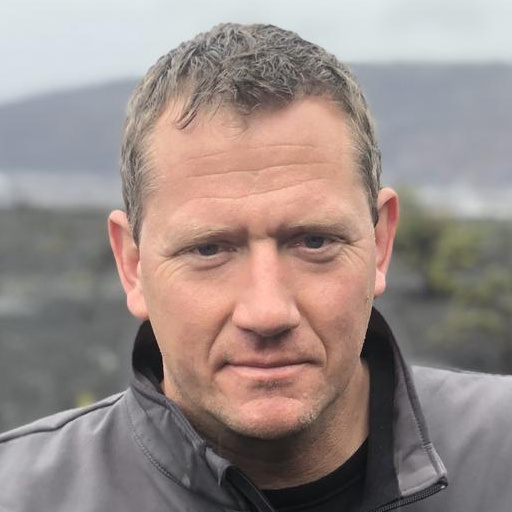
Kurt Zenz House
Co-founder & CEO
Harvard-trained earth and planetary scientist (PhD) who previously founded C12 Energy and Phase Change Resources before co-founding KoBold Metals in 2018.
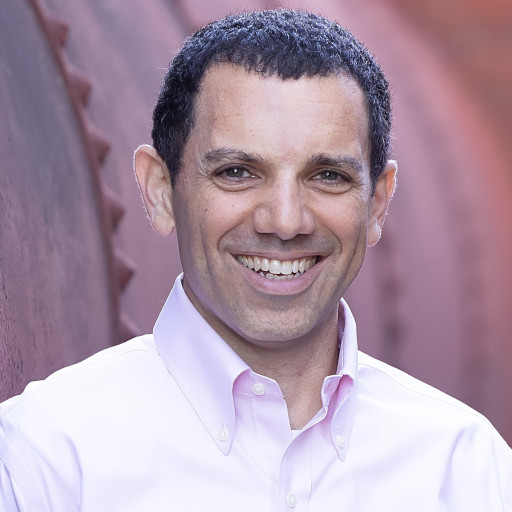
Josh Goldman
Co-founder & President
Co-founder and president of KoBold Metals with a background in strategy, carbon sequestration and reservoir engineering.
Jeff Jurinak
Co-founder
Reservoir engineer who co-founded KoBold Metals in 2018 after working with House and Goldman on a data-science-driven resource acquisition platform.