
Oura
Top 100
Illustrative curve — no price history on file for this company.
Funding
Raised a $900M round on Oct 14, 2025, bringing the total raised amount to $2B.
Returns Calculator
A $10,000 investment at Series D round (2024) would today be worth:
$21,154
2.1×the original amount
Illustrative · based on reported post-money valuations
Top posts
Mark Gurman
@markgurman
The Oura Ring 5 is official and it’s 40% smaller, making it far closer to a wedding band or non-smart ring in size. It also has new health features like sleep apnea and hypertension detection - but the price is going up to $399+. https://t.co/ECoiSvg0CM
Haseeb >|<
@hosseeb
OK, so I became one of those people: Claude diagnosed my sleep disorder. Here's the story. I'd been sleeping worse and worse since hitting my mid-30s. I've been averaging 5:30-5:45 a night for a couple years now, while in my 20s I was getting 7+ hours a night. I figured it must be stress, sleep hygiene, perhaps just aging--or maybe I'm one of those freaks of nature who doesn't actually need much sleep. Eventually I bought an Oura ring and started tracking sleep, figuring "what gets measured gets optimized." But it didn't optimize anything, it mostly just showed me high-resolution charts that, yeah, my sleep sucks. It never pointed out anything obviously wrong other than how little I was sleeping. Nothing seemed to help. Phone in another room, eye mask, blackout curtains, white noise machine, nothing seemed to help. My body just didn't want to sleep more than 6 hours a night. Eventually I decided: fuck it. I'm pretty productive, maybe this is all I need. People say humans need 7-9 hours a night, but that's averages right? I'm probably just an outlier. I stopped worrying about it. Later I mentioned to an acquaintance that I was tired since I had woken up multiples times in the night. They said: multiple times? That's really weird. You shouldn't be waking up multiple times in the night at your age. Weird? That's not weird. Is that weird? That evening I asked Claude: is it weird for an in-shape mid-30s male to be waking up multiple times a night? Answer: yes, that is weird. If you aren't sleeping enough and waking up multiple times a night, that usually means something is wrong. You should look into getting a sleep study. I asked it what a sleep study measures, and if any of that data already lived in my Oura ring. Sure enough, some of it did--not sleep study grade, but enough for a first cut. So I busted out Claude Code, since I would want Claude to have maximum access to tools for this. I had it figure out how to pull from the Oura API (using personal access tokens, ask your Claude for instructions) and pull down all of my sleep data. I then had it use Python to statistically analyze everything (heart rate, SpO2, wake events, sleep stages), test multiple hypotheses, and generate a dashboard full of charts, while explaining everything it was doing so I could follow along. After 30 minutes of slicing and dicing, a hypothesis emerged: UARS, upper-airway resistance syndrome, a mild cousin of sleep apnea. No way. Sleep apnea? I don't snore, I'm not overweight. No way I have sleep apnea. This is the first time I've ever heard this. Claude walked me through it. UARS is milder than full-blown sleep apnea. In UARS, your airway doesn't collapse, it just narrows, particularly in REM sleep when the muscles in your throat relax. This causes your oxygen to gradually drift down over the course of REM sleep, until your brain yanks you awake before it becomes a full apnea. In your 20s the muscle tone in your throat keeps your airway open, but as you age that tone slackens, which can trigger this effect, fragmenting your sleep. It looks exactly like this: waking up disproportionately during REM sleep multiple times a night. That actually tracked; I realized that almost every time I woke up in the middle of the night, it was out of a dream. Claude was clear that the Oura ring data was not dispositive, because it wasn't able to measure breathing disruptions per hour (RDI), which you'd get in a sleep study. Do a sleep study, get the RDI number, and then we'll have our smoking gun. It pointed me to an FDA-approved at-home sleep study device (with finger probe and chest sensor) called WatchPAT for $200. After one night of recording, I got the results back to the next day: Mild sleep apnea, likely UARS. Dammit Claude. Nicely done. Here's the takeaway, and why I'm posting this: I'm a textbook "no way it's me" case. UARS often shows up in healthy, normal weight people who don't fit the apnea stereotype, and often gets missed for that reason. It's easy to attribute poor sleep to insomnia or anxiety or stress, and there's an infinite supply of influencers who will pitch you reasons to feel like your sleep ritual is the problem. If you just got that red light glasses, or the blackout curtains, or took that sleeping peptide, maybe you'd be able to fix your sleep. Roughly 10-15% of adults have some form of sleep apnea, and vast majority of them (80%+) are undiagnosed. If this might be you, run your fitness tracker data through your neighborhood frontier LLM. You'll thank yourself later.
sazu.base.eth
@0xSazu
GM & gSleep Most sleep platforms report data. @sleepagotchi transforms insights into meaningful daily health decisions. Four AI agents deliver personalized guidance across $SLEEP, wellness, nutrition, and everyday lifestyle choices. Privacy remains central, with biometric data processed on-device instead of uploaded externally. Over 20 million hours of sleep have strengthened personalized intelligence across the growing ecosystem. More than 500,000 users benefit from seamless integration with Whoop, Oura, and Apple Watch. Health data becomes a valuable personal asset, supporting informed decisions through trusted AI assistance. The future of wellness combines intelligent insights, user ownership, and privacy first innovation.
DeRizvi
@Rizvi_On_X
Good night sleeprs. Spent some time thinking about Sleepagotchi and why the project stands out to me. Most health apps stop at tracking data. Sleepagotchi is trying to build the intelligence layer that turns everyday wellness data into personalized insights and better decisions. Before the AI Sleep Coach even launched, they already had: • 200K+ active users • 2M+ Telegram users • A community building daily habits around sleep That foundation matters because habit formation is one of the hardest parts of health technology. Now they’re building on top of that with AI-powered experiences: • Sleep Coach • Wellness Coach • Meal Planner • Shopping Agent What makes the approach interesting: • User-owned and permissioned health data • Wearable integrations like Apple Watch, Whoop, and Oura • Evolution from sleep-to-earn into a broader wellness platform Turning data into insights is valuable. Turning those insights into better daily choices is where the real opportunity is. Sleep well, everyone. The future of health might not just be about tracking, it might be about understanding. stay tune @sleepagotchi.
SZB ✰
@Shahzaib0x
Most people still frame @sleepagotchi as a "sleep-to-earn" project. After spending time exploring what they have actually built, I think that description no longer fits. The interesting part is not rewarding sleep. It is the AI coordination layer running behind the scenes. Instead of treating every health metric as an isolated data point, the platform connects multiple AI agents that continuously share the same context. Imagine waking up with poor recovery after a stressful night. That single signal doesn't stay inside one dashboard. It flows across the system. ⇒ The Sleep Coach reassesses your recovery. ⇒ The Wellness Coach adapts your routine based on your condition. ⇒ The Meal Planner updates nutrition suggestions to match your energy needs. ⇒ The Shopping Agent recommends products that fit your current health profile. Each agent reacts to the same real-time context rather than operating independently. That's a very different design philosophy from traditional health apps, where every feature usually works in its own silo. Another detail I found interesting is how they approach privacy. Instead of building a permanent database of user biometrics, health data is anonymized before AI processing, transformed into useful insights and then removed. The goal is to deliver personalised intelligence without turning sensitive health information into a long-term platform asset. That feels like a more user-first approach as AI becomes increasingly integrated into healthcare. Starting with sleep also makes a lot of sense. Sleep is one of the few health signals almost everyone generates every single day without changing their behaviour. Once that foundation exists, expanding into recovery, nutrition, wellness planning and personalised recommendations becomes much more natural. Today sleepagotchi has already attracted more than 500K users and supports integrations with devices like WHOOP, Oura, Apple Watch and others. The multi-agent system is not just an idea on a roadmap it is already being put into practice. As AI continues reshaping digital health, I think the biggest opportunity won't come from collecting more data. It will come from connecting existing signals in ways that produce genuinely useful, real-time decisions while keeping users in control of their own information. That's the direction Sleepagotchi seems to be taking and it is one of the reasons I'm following the project closely. Nobody talks about this part of @CNPYNetwork and it is honestly the interesting bit. Every serious AI team eventually hits the same wall. you are on a shared chain dealing with noisy neighbors, governance fights, fee spikes and upgrade risk you never signed up for. at some point you either build your own L1 from scratch or stay dependent forever and hope nothing breaks.
e_camli
@ekinoks_26
An independent review of the AI Sleep Coach landed a 5 out of 10. Wearable integrations work, gamification is competent, free price point removes any risk. But the actual coaching, the reviewer wrote, is too shallow to justify adding another app to an already crowded health stack. That's a useful outside check against a launch narrative built almost entirely on the team's own numbers. The 78% morning open rate, the $100k beta revenue, the 2 million user base are all real and all worth taking seriously. But none of them measure whether the AI's actual output, the causal explanation of why last night went the way it did, is genuinely better than what a person already gets from their Whoop or Oura app natively. An independent reviewer sitting with the product for real usage found the dashboard clean but shallower than the native tools it's meant to sit alongside. @sleepagotchi is still free during this MVP phase specifically because there's nothing to charge for yet. No premium tier, no token gating, no confirmed pricing as of this writing. That's honest positioning for a pre-revenue product, and it buys time to improve the coaching depth before asking anyone to pay for it. The gap between infrastructure and insight is the real product risk here, not the token model. Wearable integrations and biometric pipelines are solvable engineering problems. Making an AI's health advice meaningfully better than a $70/month competitor like Noom, or better than the wearable's own native app, is a much harder bar, and it's the one that hasn't been cleared publicly yet.
Hiring Signal
Based on public job postings · updated monthly
Latest news


Public companies tied to Oura

About Oura
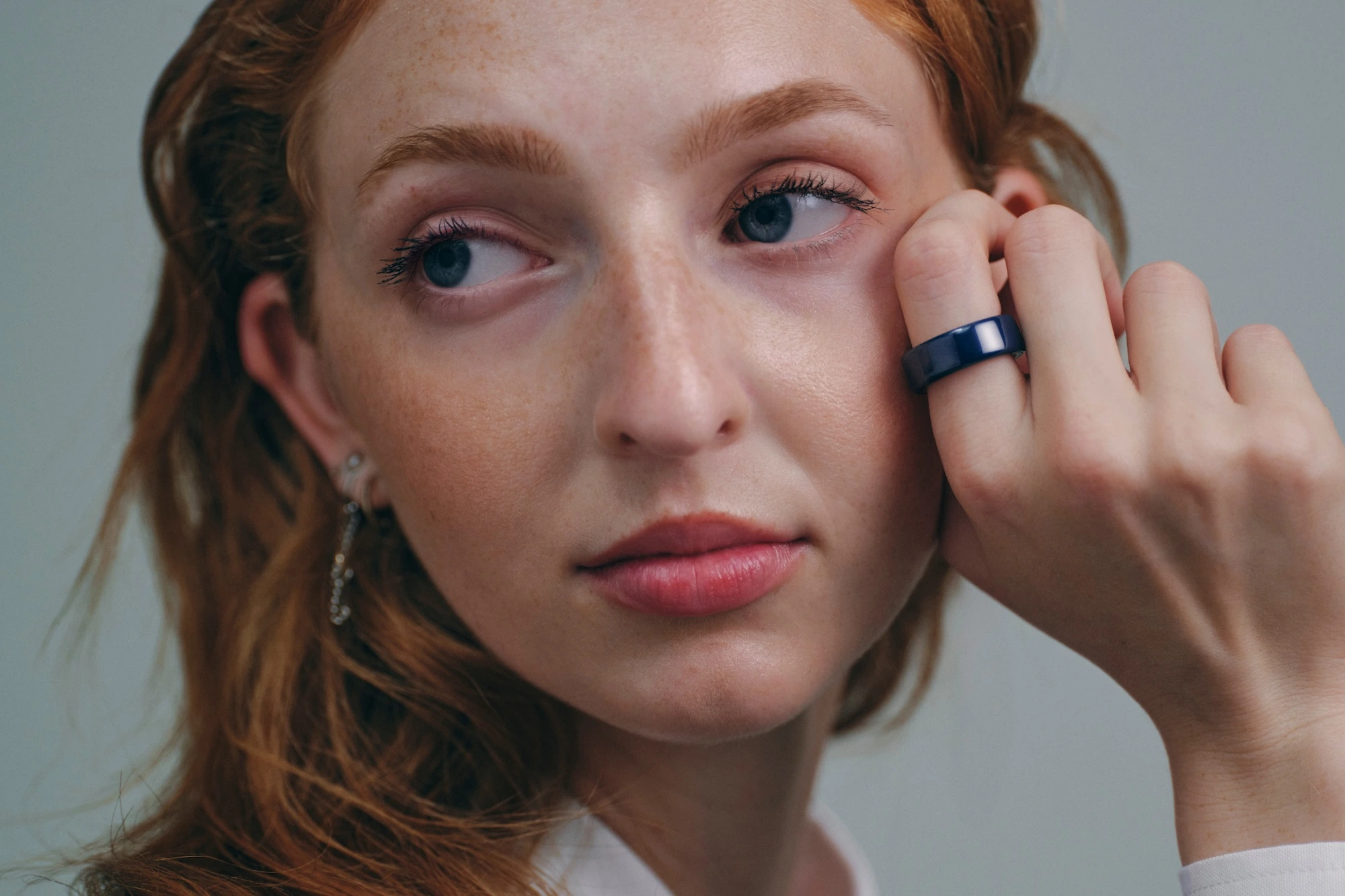
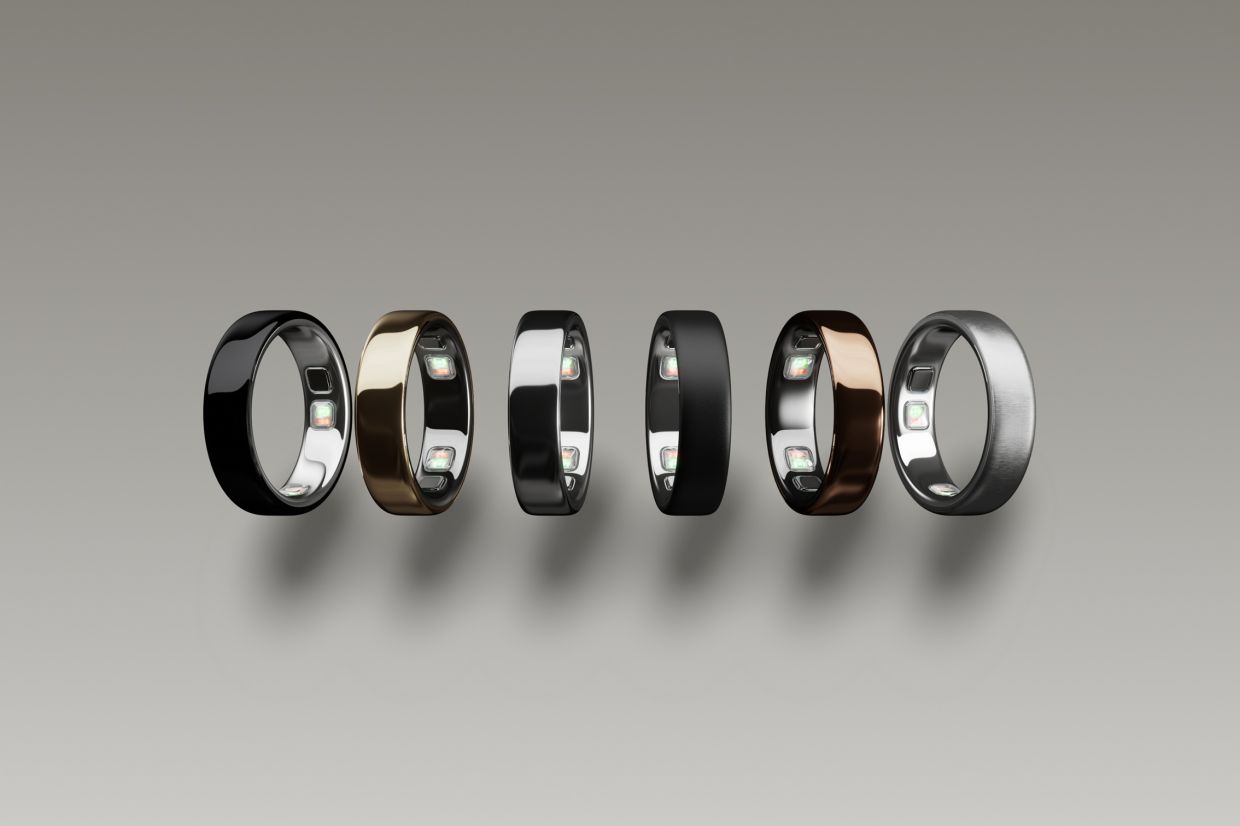
Oura (Ōura Health Oy) is a Finnish consumer-health company that makes the Oura Ring, a smart ring that tracks sleep, heart rate, activity, body temperature and readiness. Founded in 2013 in Oulu, Finland, by Petteri Lahtela, Kari Kivelä and Markku Koskela and now led by CEO Tom Hale, the company has sold more than 5.5 million rings and reached a roughly $1 billion annual revenue run rate in 2025. It hit an $11 billion valuation in an October 2025 Series E and filed confidentially for a US IPO in 2026.
Oura on video


Founders
Key leaders
Recent hires
Brian Lynch
Senior Vice President of Hardware Engineering
Previously at Apple
Joined Mar 2026
Andrew Smolenski
Vice President, Monetization & Commercial Operations
Previously at Glassdoor · San Francisco Bay Area
Joined Jun 2026

Alexey Lyubchenko
Senior Engineering Manager
Previously at WhatsApp · Los Angeles, California, United States
Joined Jul 2026

Shannon McGinnis
Senior Technical Program Manager, Commerce
Previously at Freelance · Canyon Lake, Texas, United States
Joined Jun 2026

Andriy Borovyk
Director of Software Engineering, Human Care
Previously at EPAM Systems · Greater Philadelphia
Joined Jun 2026
Caroline Currie
Product Director, Health Domains
Previously at InsideTracker · Greater Boston
Joined Jun 2026