
Boston Dynamics
Top 100
Illustrative curve — no price history on file for this company.
Returns Calculator
A $10,000 investment at Acquisition (Hyundai, 80% stake) round (2021) would today be worth:
$181,818
18×the original amount
Illustrative · based on reported post-money valuations
Top posts
Sawyer Merritt
@SawyerMerritt
Hyundai is taking full ownership of U.S. robotics company Boston Dynamics by acquiring the remaining 9.65% stake held by Japan’s SoftBank Group for $325 million. https://t.co/sOYGPFnKqG
Aakash Gupta
@aakashgupta
The robot dog was invented in America. China just turned it into a business. Boston Dynamics created this category with BigDog in 2005, funded by DARPA. Spot, the commercial version, launched in 2020 at $75,000 per unit. In three decades the company has never been profitable. Google bought it, gave up, and sold it to SoftBank. SoftBank gave up and sold it to Hyundai at a $1.1B valuation. Unitree was founded in 2016 by Wang Xingxing, who built his first robot dog in grad school because he couldn't afford the hydraulics Boston Dynamics used. So he used cheap electric motors. That constraint became the moat. Hydraulics are precise but expensive and leak. Electric actuators are mass-manufacturable, and the whole supply chain sits in China. The AS2-W in this video weighs 18kg, climbs 40-degree slopes, carries a 16kg payload with 30+ km of range, and crosses cliffs using a reinforcement learning model running in real time. The base platform starts around $36,700. Half of Spot, before Spot's sensor packages and service contracts. The financials are the part nobody is watching. Unitree did ¥1.7B in revenue in 2025, up 335%, at 60% gross margins. Profitable, and now going public at a $6.2B valuation. Boston Dynamics, three owners and thirty years in, still loses money. The company that invented the robot dog spent 30 years perfecting it. The company that copied it spent 10 years learning how to sell it. Only one of those turned out to be the hard problem.
The Humanoid Hub
@TheHumanoidHub
Jensen Huang: "I think the technology is ready and it could be useful, so I really do hope somebody in Japan creates the world's most lovable humanoid robot again." News from Japan this week: amid soaring memory prices, NVIDIA introduced smaller Jetson Thor modules. New Jetson Thor modules (Blackwell): - T3000: 865 FP4 TFLOPS, 32GB LPDDR5X, 273GB/s bandwidth, in roughly half the size and power of the T5000, yet matching its inference. - T2000: 400 FP4 TFLOPS, 16GB, an entry point for mobile robots, manipulators and visual AI agents. Both run the full modern stack on-device: LLMs, VLMs, vision-language-action models and world foundation models. Migrating to T3000 also cuts cost amid high memory prices. Also new: Cosmos 3 Edge, a 4B-param open world foundation model built for Thor. It lets a robot see, reason and predict actions on-device, and can be post-trained for a specific embodiment and sensor set in about a day to close the sim-to-real gap. Plus Jetson agent skills that auto-optimize memory: UBTech and Agile Robots cut usage by up to 15GB, letting them drop to smaller, cheaper modules without losing performance. The platform now spans 70 TOPS to 2,000 TFLOPS. Already building on Thor: 1X, Boston Dynamics, Agile Robots, Amazon Robotics, FANUC. T3000 emulation mode arrives this month. Both the T3000 and T2000 modules ship in Q1 2027. https://t.co/6YqaHYr6dN
Pukerainbow 🤮🌈
@pukerrainbrow
SoftBank's robotics portfolio: what it bought, what it sold, what died. 1. Aldebaran (Pepper/NAO) - bought 2012 for $100M. Majority sold to United Robotics Group in 2022, kept a minority stake in the buyer. 2. Boston Dynamics - bought from Alphabet in 2017. Sold 80% to Hyundai in 2020 for $880M. Just sold the remaining ~9.9% to Hyundai this month for $325M, a full exit six years in the making. 3. Schaft - was supposed to come bundled with the Boston Dynamics deal from Alphabet in 2017. That leg fell through. Alphabet shut it down in 2018. Never actually became a SoftBank company. 4. Zume - $375M bet in 2018 on a robot-made pizza startup. Pivoted to packaging. Went insolvent. Total loss. 5. Berkshire Grey - Vision Fund investor since 2019 at a 29% stake. Instead of exiting, took the whole company private for $375M in 2023. 6. KEENON Robotics - $200M Series D in 2021 for delivery robots out of China. Still holding. 7. Skild AI - in talks as of early 2025 for a $500M check at a $4B valuation, a robotics foundation-model company. Still building this position. 8. ABB's entire Robotics division - agreed Oct 2025 to buy it outright for $5.375B, the single largest robotics move SoftBank has ever made. Expected to close later this year, the same stretch it's finishing the Boston Dynamics exit. Some interesting observations: • The exits (Pepper, Boston Dynamics) are both consumer-facing, humanoid-adjacent robots people actually recognize by name. • The $5.375B ABB deal alone is bigger than every other number on this list combined. • Two of the failures (Zume, Schaft) never shipped a real product at scale, the losses came from the idea, not execution. • Berkshire Grey is the one time SoftBank had the option to exit and chose to buy more instead. It might look like SoftBank is leaving robotics. It isn't. It's exiting on the robots you'd recognise by name and putting $5B+ into the robots that never show up in a headline. That's a rotation, not a retreat.
Leonard
@Leoskie_L
South Korea is not trying to become the next OpenAI. It is trying to become something harder to replace: the country that supplies the hardware, trains Physical AI inside real factories, and exports the entire AI factory as a product. That is the real meaning of Korea’s new Manufacturing AI 2030 strategy. The headline numbers are big: KRW 20 trillion in public and private investment 500+ AI factory projects 120 manufacturing datasets 36 industrial AI models 1,200 manufacturing AI agents 30,000 trained specialists USD 10 billion in AI factory exports But the numbers are not the most important part. The real strategy is this: Manufacturing data → industrial models → AI agents → robots → full-stack AI factories → global exports Korea knows it is unlikely to beat the United States in general-purpose foundation models. It also cannot easily match China’s scale, domestic market, or deployment speed. So it is choosing a third path. It will use what it already owns: Samsung and SK hynix in semiconductors and HBM. Hyundai and Kia in automotive manufacturing. Boston Dynamics in robotics. LG in batteries, electronics, displays, and materials. HD Hyundai and Samsung Heavy Industries in shipbuilding. POSCO, Hanwha, SK Energy, and others across steel, defense, refining, and chemicals. The Korean government is not planning to build one giant state-owned AI company. It is trying to turn these industrial groups into a national AI team. The government provides funding, standards, shared infrastructure, test sites, policy finance, and export coordination. The companies provide the things AI labs cannot buy easily: real factories, proprietary process data, engineering knowledge, robotics environments, and global customer trust. Samsung and SK hynix are not only HBM suppliers. Their fabs generate some of the most valuable industrial data in the world: defect images, machine signals, thermal data, CT scans, process parameters, maintenance records, and yield data. Hyundai is not only a carmaker. Its factories, logistics systems, robotics programs, and ownership of Boston Dynamics make it one of Korea’s most important Physical AI test beds. LG brings batteries, precision electronics, materials, displays, and appliance manufacturing. Shipyards, refineries, and chemical plants provide something even more valuable: complex physical environments where temperature, pressure, flow, materials, machines, and human safety all interact. Korea may not build the world’s best humanoid robot first. But it could build the world’s most demanding industrial training ground for humanoid robots. That matters. A robot trained in warehouses is useful. A robot that can work in shipyards, battery plants, semiconductor fabs, chemical facilities, and automotive factories is a commercial platform. Korea’s biggest ambition is not simply to make its own factories more efficient. It wants to package factory design, digital twins, production scheduling, quality control, predictive maintenance, robotics, logistics, industrial software, cybersecurity, and financing into one exportable system. In other words: Korea wants to move from exporting cars, chips, batteries, and ships… to exporting the operating system for making cars, chips, batteries, and ships. That is a much larger business. But this is also where the plan becomes difficult. The real bottleneck is not computing power. It is trust. Will Samsung share the process data that determines HBM yield? Will SK hynix contribute data to a model that competitors could benefit from? Will Hyundai share manufacturing knowledge across suppliers? Who owns a model trained on data from several companies? Who is responsible when an AI agent causes equipment damage, production losses, or a safety incident? And what prevents government-funded models from becoming private tools used only by the largest chaebol? These are not model problems. They are problems of ownership, incentives, liability, and power. That is why I rate the strategy 6.5 out of 10. The direction is strong. The industrial logic is real. The companies, factories, pilot projects, and early funding already exist. But the most important rules—data rights, IP ownership, commercial incentives, liability, and post-subsidy survival—are still incomplete. The next phase will determine whether this becomes a real industrial platform or another beautiful government pyramid. Watch four things: 1. Real annual budgets after 2027 Not headline commitments. Actual allocated money. 2. Data and IP rules Who contributes, who owns, who earns, and who is liable. 3. Pilot projects after subsidies end If factories continue paying, the technology is real. 4. The first overseas full-stack AI factory contract Not a robot sale. Not a software licence. A complete industrial system. South Korea does not need to become the next OpenAI to matter in the AI world. It could become something equally strategic: the supplier of AI memory, the training ground for Physical AI, and the exporter of the AI factory itself. That is the bet. And if it works, Korea will no longer be selling only what factories produce. It will be selling the factory’s intelligence.
CyberRobo
@CyberRobooo
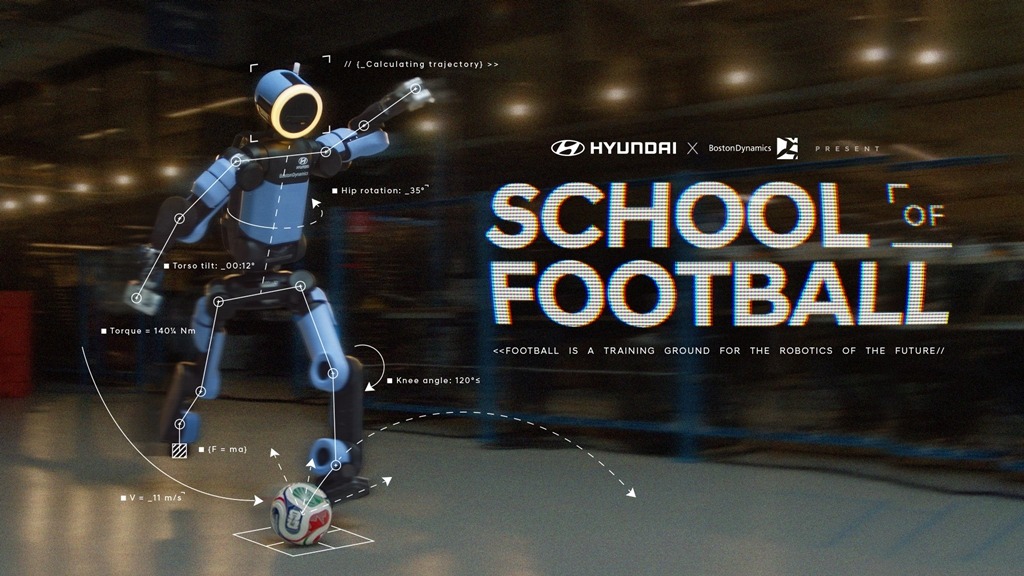
Hyundai's Atlas humanoid hasn't even stepped onto the factory floor yet, but it just triggered the auto industry's first partial factory shutdown over robots. South Korean union workers(involves approximately 34,000 workers) in Ulsan are on rolling strikes, demanding job & income guarantees before any deployment of Boston Dynamics' Atlas. Hyundai plans 25,000+ units globally, starting at the US Metaplant in 2028. the real-world friction between humanoid automation and labor has begun. Not anti-tech, but a necessary conversation on how humans and robots coexist on the line.
Latest news

Public companies tied to Boston Dynamics
About Boston Dynamics
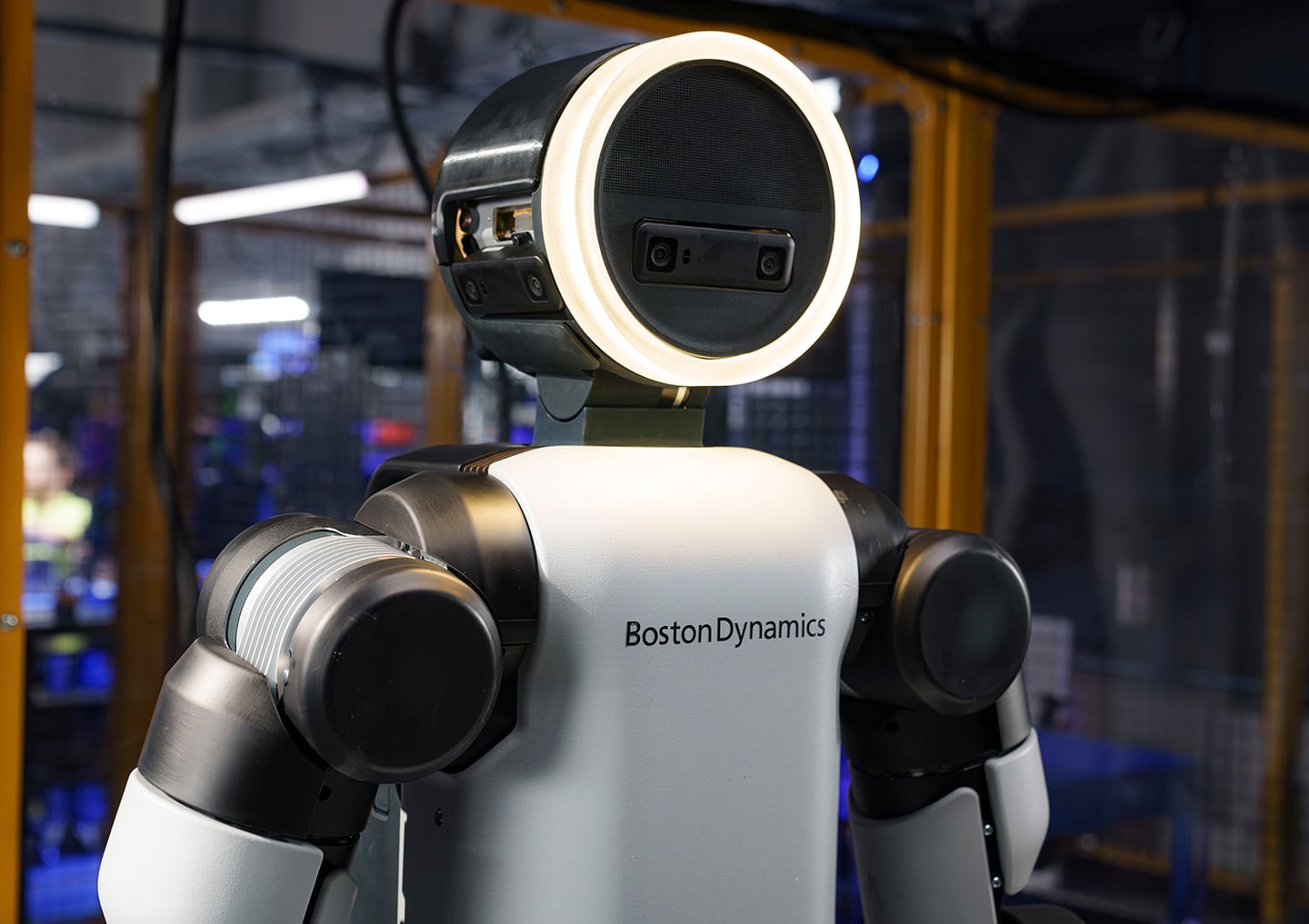
Boston Dynamics is a pioneering robotics company known for its highly agile machines, including the Spot quadruped, the Stretch warehouse robot, and the all-electric Atlas humanoid. Founded in 1992 as an MIT spin-off by Marc Raibert, it is now a wholly owned subsidiary of Hyundai Motor Group, which took 100% ownership in 2026 after buying out SoftBank's remaining stake. Its production-ready electric Atlas, unveiled at CES 2026, is being deployed in Hyundai factories and developed jointly with Google DeepMind.
Boston Dynamics on video


Founders
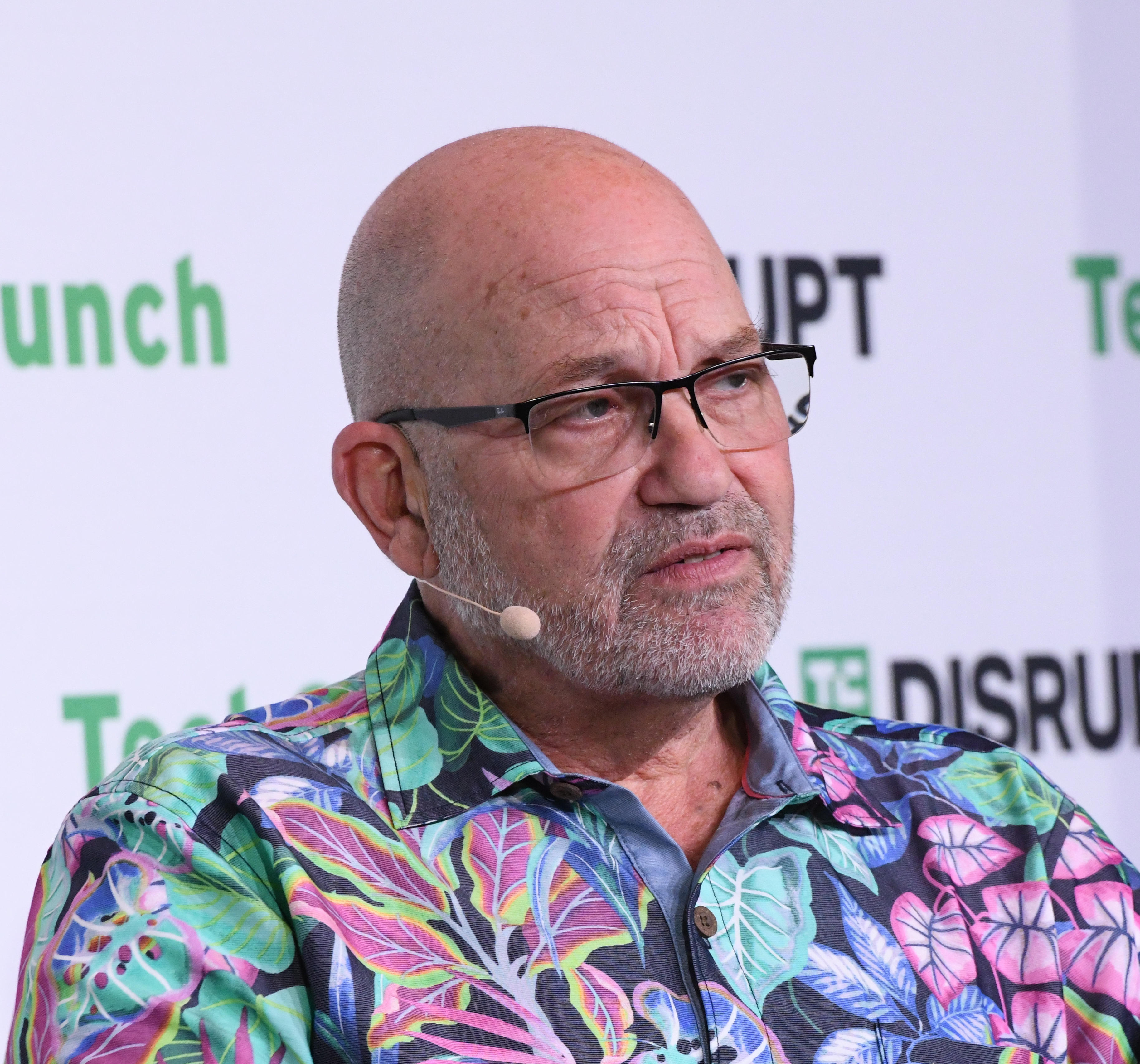
Marc Raibert
Founder & Chairman
Former MIT and Carnegie Mellon robotics professor who founded Boston Dynamics in 1992; now chairman and head of the Boston Dynamics AI Institute.
Robert Playter
Co-founder & former CEO
Joined at the company's founding after completing his MIT PhD; served as CEO from 2019 until stepping down in February 2026.
Key leaders
Recent hires

Taraneh F.
Head of Strategic Programs & Business Operations PMO
Previously at Spectrum Control · Bolton, Massachusetts, United States
Joined Jun 2026
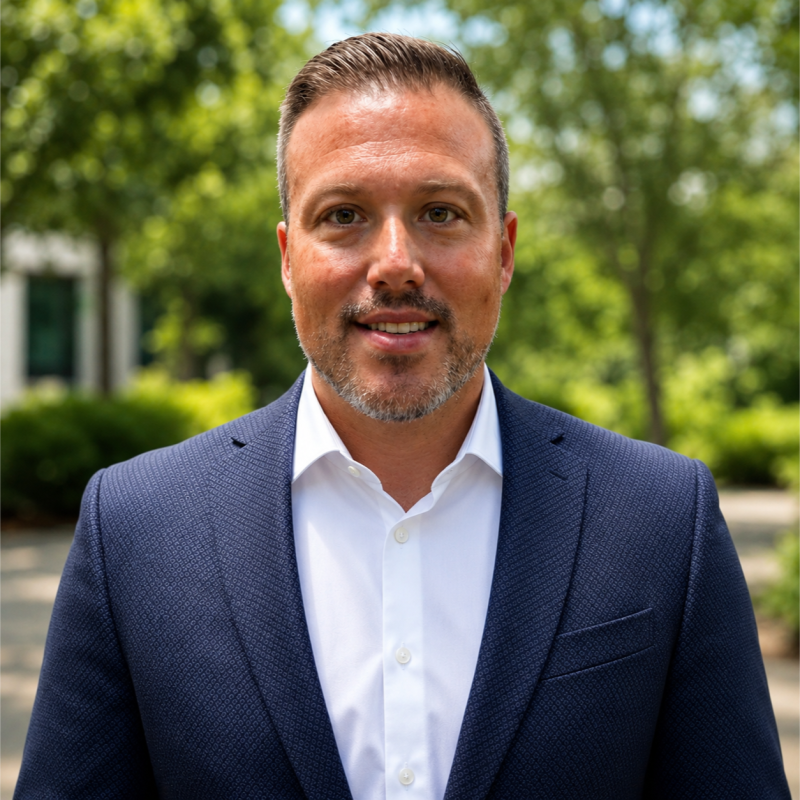
Joel Turner
Enterprise Sales Manager
Previously at VerticalXchange · Gainesville Metropolitan Area
Joined Jun 2026

Erick Roesch
Principal Data Architect
Previously at Snowflake · Greater Boston
Joined Jun 2026
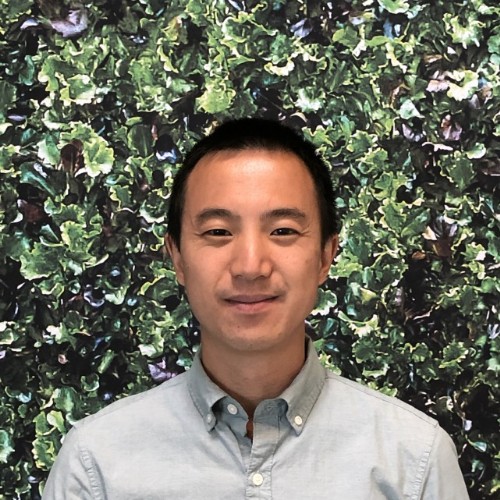
Kevin S.
Mechanical Engineering Manager, Atlas Actuation
Previously at SharkNinja · Greater Boston
Joined May 2026

Sascha Goldsmith
Senior Mechanical Engineer
Previously at SpaceX · Culver City, California, United States
Joined Jun 2026
Tom Rufo
Senior Production Supervisor
Previously at Farm, A Flex Company · Windham, New Hampshire, United States
Joined May 2026