
Colossal Biosciences
Top 100
Illustrative curve — no price history on file for this company.
Funding
Raised a $120M round on Sep 17, 2025, bringing the total raised amount to $615M.
Returns Calculator
A $10,000 investment at Series B round (2023) would today be worth:
$103,200
10×the original amount
Illustrative · based on reported post-money valuations
Top posts
Mgoes (bio/acc 🤖💉)
@m_goes_distance
Colossal Biosciences is reportedly raising at a $20–30B valuation Up from $10.2B just ~16 months ago Not a single extinct species brought back yet That should tell you something. The mammoth isn't the business, it's the wrapper. Underneath it: CRISPR, computational genomics, reproductive biology, gene editing, AI-native biology, species engineering Backed by Founders Fund, Bezos, Peter Jackson, Paul Tudor Jones, and others When the product still sounds like scifi and the valuation keeps doubling...the market isn't pricing the mammoth. It's pricing the biology platform that makes the mammoth possible If you're investing in frontier bio, let's chat. bio/acc
Prakhar Gupta
@prvkhvr
Spoke with @benlamm, founder of @colossal. The work they’re doing in de-extinction is unlike anything else. He broke down how de-extinction actually works and the science behind artificial wombs. We got into how they revived species like the dire wolf, and I also asked him about the possibility of bringing back dinosaurs. Also went over where this field might be headed—how synthetic biology, beyond de-extinction, could solve real problems in conservation, health, and manufacturing. Episode attached in both English and Hindi Dubbed Timestamps ↓ 00:00 - What Is Colossal Doing? 01:30 - What is De-Extinction? 03:05 - Science Behind Artificial Wombs 21:07 - How did they de-extinct direwolves? 32:01 - What other animals can return? 35:48 - Can we revive dinosaurs? 47:07 - Technologies changing the World 49:03 - What if Tech had no limits? 53:49 - Can we create entire new species? 58:34 - 3D-Printing Food 01:02:12 - Colossal’s Business Model 01:11:11 - Can We Bring Dead People Back to Life? 01:17:03 - Can This Technology Backfire on Us? 01:18:13 - Ben’s Biggest Fears 01:20:40 - What If We End Up Creating Zombie-Like Species? 01:24:15 - His Views on God & Life
Owen Lewis
@is_OwenLewis
Colossal Biosciences just struck a landmark deal with the U.S. Fish and Wildlife Service to collect and cryopreserve cells and tissue from every single species on the U.S. endangered species list. The partnership, announced June 25, 2026, aims to create a comprehensive national biobank that could one day support de-extinction efforts or, more immediately, help strengthen the genetics of surviving populations against threats like habitat loss and disease. Colossal will use non-invasive methods (blood draws and skin biopsies), plus opportunistic sampling from carcasses and zoo deaths. The samples will be sequenced and, in many cases, turned into induced pluripotent stem cells for future genetic work. The resulting biobank will be open-sourced to researchers worldwide. @BenLamm, Colossal’s co-founder and CEO, framed the vision clearly: “We want a digital twin of nature… something like the old school library card catalog for life.” Matt James, Colossal’s chief animal officer, added that the goal is far more ambitious than the government’s initial suggestion of 100 species: “Let’s just say, aspirationally, we’re going to go for every species on the list.” This marks one of the most significant government-backed efforts yet to preserve the full genetic legacy of America’s threatened wildlife — and positions Colossal’s de-extinction technology as a long-term insurance policy for biodiversity.
Michael Shermer
@michaelshermer
I asked Gemini "Was a Dire Wolf found on Skinwalker Ranch?" @BrandonFugal & it gave me the DNA study. A deeper dive, however, concludes 11% gray wolf, 89% unknown. If it were a Dire Wolf that had survived 13,000 years, where's their breeding population? In any case, what do you think it was? "No scientific confirmation exists stating that a living or recently deceased dire wolf was found on Skinwalker Ranch. While a History Channel television episode features claims regarding a "dire wolf" carcass, actual genetic testing did not validate the existence of the extinct species on the property. The narrative developed through two seasons of The Secret of Skinwalker Ranch: The Carcass Discovery During Season 5 (filmed in 2023), the investigative team found a severely decayed canine carcass in a creek bed on the property. A local biologist examined the jawbone and teeth structure, noting that the unusually large physical features strongly resembled those of a juvenile dire wolf (Aenocyon dirus)—a megafauna species that went extinct roughly 10,000 years ago. The DNA Results In Season 6 (aired in 2025), the team sent DNA samples from the bone to the biotechnology company Colossal Biosciences. The results were highly inconclusive rather than a definitive match for an extinct dire wolf: 11% Match: The genetic profile partially matched modern gray wolves native to Greenland and Eurasia—populations that do not naturally exist in Utah. 89% Unknown: The remaining majority of the DNA did not match any known modern canine sequence in the testing database. Context and Skepticism Critics and viewers have pointed out a significant conflict of interest regarding the discovery. Ranch owner Brandon Fugal is a prominent investor in Colossal Biosciences, a company heavily publicized for its genetic engineering and "de-extinction" projects—including attempts to recreate a dire wolf-gray wolf hybrid. Because the show did not cross-reference the carcass sample against established ancient dire wolf fossil DNA, critics suggest the segment served primarily as a promotional storyline rather than a genuine scientific breakthrough." Is that correct Brandon? Have you since cross-referenced the carcass sample against established ancient dire wolf fossil DNA? BTW, I support the idea of de-extinction and glad you're attempting it, and would love to see a return of the Dire Wolf (and the Dodo, Wooly Mammoth, etc.), but that's a separate matter.
Oxygen
@Oxygen_Token
Scientists are building a backup copy of every endangered animal in America, cell by cell. This week, the U.S. Fish and Wildlife Service and a genetics company announced a plan to collect, freeze, and fully sequence living cells from all 2,300+ species on the country’s endangered list. Living tissue. Reproductive cells. Complete genomes. Stored like a seed vault, but for animals. The idea is simple: if a species disappears, its biological blueprint survives, helping conservation efforts today and potential future restoration. It’s an extraordinary scientific achievement. But it also highlights a difficult reality. We can preserve the code of life. We still can’t replace the ecosystems that keep it alive. [Source: TIME, June 25, 2026. U.S. Fish and Wildlife Service and Colossal Biosciences launch BioVault for endangered species.]
Interstellar
@InterstellarUAP
Brandon Fugal: "We found a DIREWOLF carcass at Skinwalker Ranch that was extinct 125,000 years ago" 😱 “It’s a whole carcass. A whole carcass. Decomposing carcass.” At Skinwalker Ranch the team found a full wolflike carcass in Dry Gulch Creek. Biologist Ben Woodruff examined the jawbone and teeth and said the direct match is a juvenile dire wolf, a species extinct for tens of thousands of years. DNA testing at Colossal Biosciences came back mostly inconclusive. The majority could not be identified. Only portions matched gray wolf. The rest remains a mystery. This sits right where the Sherman family once reported giant wolf-like creatures attacking cattle and vanishing toward that same creek. Fugal notes the physical evidence and DNA deepen the mystery and raise the possibility of portals that allow transit between places and times. The jaw is a direct match. The teeth are a direct match to an extinct species that has no known population in Utah.
Hiring Signal
Based on public job postings · updated monthly
Latest news

About Colossal Biosciences
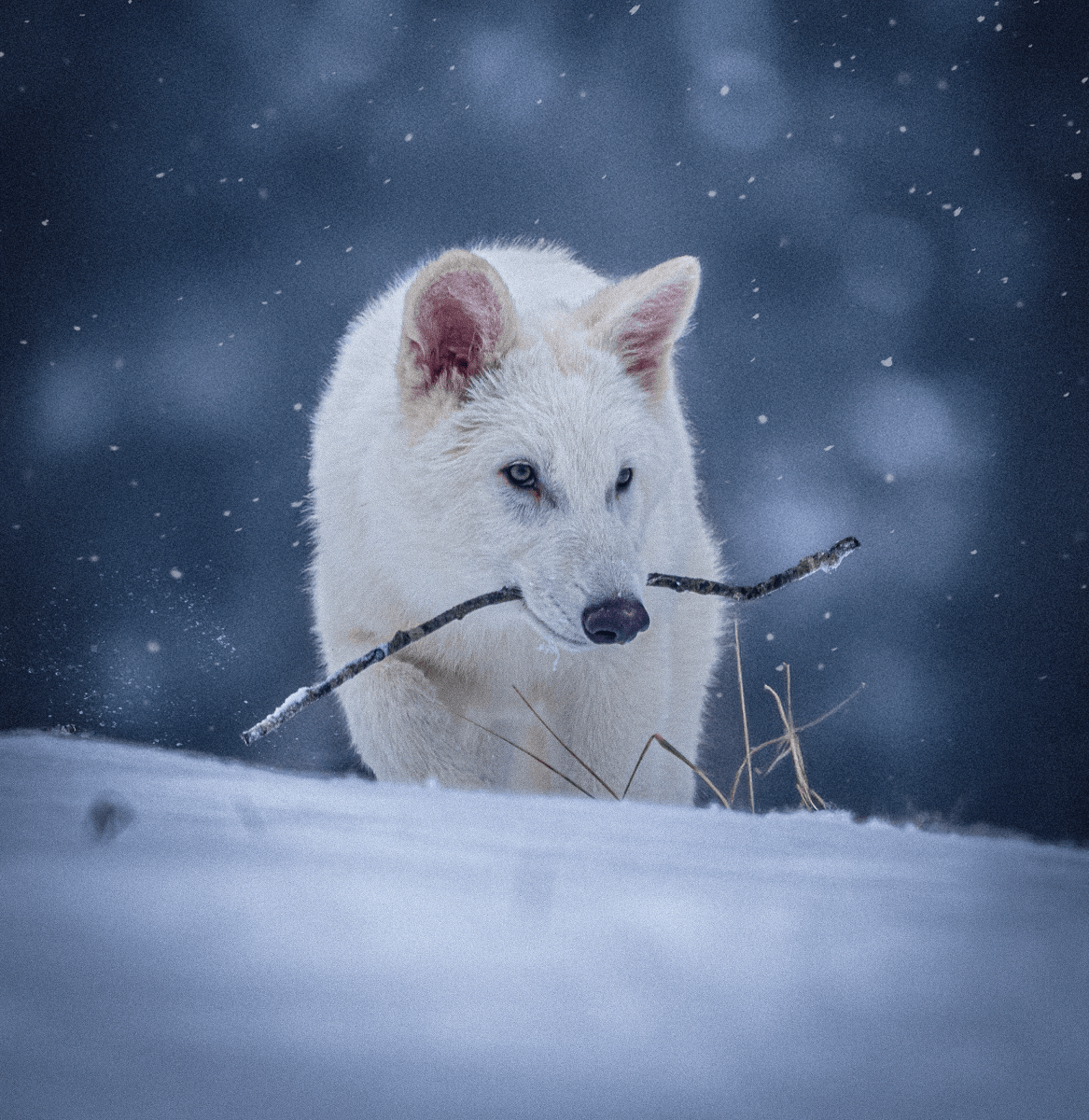
Colossal Biosciences is a Dallas-based genetic engineering and biotechnology company pursuing 'de-extinction' — using CRISPR gene editing, ancient-DNA analysis, and reproductive technology to engineer proxies of extinct species such as the woolly mammoth, dodo, and thylacine. In April 2025 it announced the birth of three gene-edited dire wolves, which it billed as the world's first de-extinction. Its underlying tools also spin out into conservation and human-health applications, and the company reached a $10.32 billion valuation in 2025, making it Texas's first decacorn.
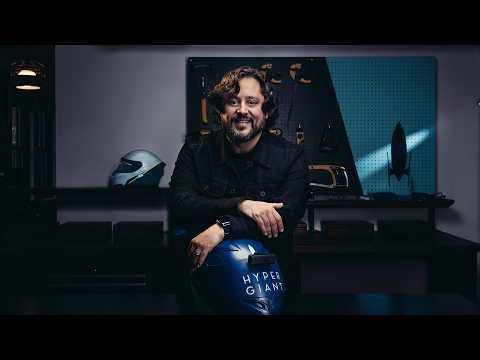
Colossal Biosciences on video


Founders
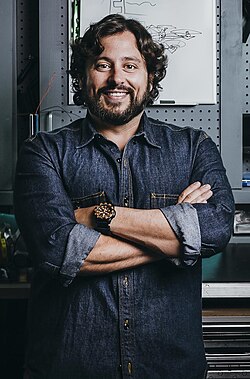
Ben Lamm
Co-founder & CEO
Serial technology entrepreneur who previously founded and sold several software and AI startups; co-founded Colossal Biosciences in 2021 to commercialize de-extinction and became a billionaire on its valuation.
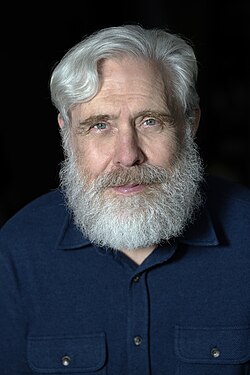
George Church
Co-founder
Harvard Medical School geneticist and pioneer of genome sequencing and CRISPR gene editing whose lab's woolly-mammoth work seeded Colossal; he holds no equity in the company.
Key leaders
Recent hires

Riya Desai
Machine Learning Engineer
Previously at Faculty of Computing & Data Sciences at Boston University · San Francisco Bay Area
Joined Jun 2026

Chris Rojahn
Senior Information Technology Support Specialist
Previously at Archaea Energy · Grand Prairie, Texas, United States
Joined May 2026

Kirby Alexander
Senior IT Support Specialist
Previously at Brink’s Inc · Lewisville, Texas, United States
Joined May 2026