
OpenEvidence
Top 100
Illustrative curve — no price history on file for this company.
Funding
Raised a $250M round on Jan 21, 2026, bringing the total raised amount to $700M.
Returns Calculator
A $10,000 investment at Series B round (2025) would today be worth:
$34,286
3.4×the original amount
Illustrative · based on reported post-money valuations
Top posts
Deedy
@deedydas
Every single AI startup with $10B+ valuation and $100M+ revenue run rate: Crusoe - $10B Mercor - $10B ElevenLabs - $11B Baseten - $11B* Harvey - $11B Lovable - $12B* OpenEvidence - $12B Mistral - $14B Nscale - $14.6B Fireworks - $15B* Sierra - $15.8B Moonshot - $20B Perplexity - $22.6B Cognition - $26B Scale - $29B** DeepSeek - $52-59B* Cursor - $60B* Waymo - $126B** xAI - $250B** OpenAI - $852B Anthropic - $965B 21 total companies. *rumored / unannounced **not fully independent
Amir Efrati
@amir
👀Openevidence also an M&A target, reaching $300m annualized revenue https://t.co/yIwVmgYGLP
Stephanie Palazzolo
@steph_palazzolo
OpenEvidence, which offers a "ChatGPT for doctors," is fielding investment offers at $20b, just 7 months after it last raised at $12b. The offers come as the company has doubled its annualized revenue to $300m. w/ @validapau https://t.co/yXecNpd31l
Javi Lopez ⛩️
@javilopen
🔴 I NEED YOUR ATTENTION I've spent a month helping Miriam with her case of metastatic cancer and I want to share the methodology I've been using because it's completely replicable. I think (with luck) this could be USEFUL TO OTHER PEOPLE with cancer (or any other illness). The results we've gotten aren't a miracle, but we believe they're genuinely useful and could mean the difference in a literal life-or-death medical case. Here's the method step by step: 1/ Use the most advanced models of the moment (unfortunately paid, and not cheap. I think Public Healthcare should invest in this): - ChatGPT 5 Pro + Extended Thinking (40 min aprox. of thinking per call) - Claude Opus 4.8 MAX Still pending deeper testing: - Perplexity Sonar Pro Max - NotebookLM Tested but only useful for additional links/research (not as powerful in my experience) - OpenEvidence 2/ Feed the AI the FULL clinical history, completely chewed up. This sounds dumb but it's critical. - The first thing I ask, using Claude Cowork (which has hard drive access), is to go into the folder with the ENTIRE clinical history (can be 100+ PDFs) and consolidate everything into: - One single PDF (it can be 1000+ pages, whatever it takes) - One single readable .txt or .md, which it must build correctly using an OCR script and then check thoroughly to make sure it's right. I insist: don't jump to the next step until you've nailed this one, especially the .txt. 3/ Once you have the above, use this prompt along with the .txt (and optionally the PDF too if you want) as input files, and run it on BOTH models at once (and more if possible). 👉 This prompt is insanely complex/advanced: https://t.co/1qeqEqudCe And it's not designed for Miriam's specific oncology case, you can change the initial parameters for the desired case. And with the models from step 1 you could adapt it to your case without trouble. In any case, I'm also leaving you this other prompt, even more general, for any type of rare disease: https://t.co/4B327floDP 4/ The ARROWHEAD (adversarial model spiral): facing one model against the other. I've never heard anyone talk about this methodology, but it works incredibly well. The feeling is like sharpening a stake until it gets a gleaming point. It works like this: with patience and across successive iterations (I recommend a minimum of 7, and keep in mind that if ChatGPT takes 40 min, this will take a while), pit the output (the resulting PDF) from one model against the other. With a simple prompt like: "Another committee of experts says this. What do you think? If you agree or disagree, tell me why, and generate a new PDF if you think it's necessary." Then you feed that result back to the opposite model. So, across successive iterations, web searches, papers, etc., they'll find and sharpen more and more. When to stop? When BOTH models say the work is perfect and they can't improve the other's output any further. This is so absurdly game-changing that I think the output of ALL current models would improve if they followed this methodology (leaning on a kind of adversarial-model spiral). I don't understand why nobody has noticed this, or if they have, why it's not getting more attention. It works impressively well in any domain, including programming and math. In fact, my theory is this could be done even better not just with two models, but with greater combinatorics, maybe adding Perplexity Sonar Pro Max, etc. RESULTS Incredible. Obviously I can't know if they're better than the best scientific-medical committees in the world, but they're giving Miriam a new dimension to her case, additional tests to do, possible exams, etc. Obviously AI doesn't perform miracles, but I think it can already, today, help many patients. And Public Healthcare should invest a lot (but A LOT) in this. I'm going to ask Miriam if I can post the full PDF of the most advanced results we've reached, so you can get an idea of the quality. She's already given me rough permission, but I want to make sure 100%. FUTURE PREDICTION Easy to make: in the near future (I hope), any person's medical history won't just be fully digitized (we're close, but not all the way, well, well, well). On top of that, it'll be "pre-chewed" so it can be consumed by an LLM in one shot. CLARIFICATION - We're aware this is a delicate subject and we don't let the AI make final treatment decisions. What we're doing is clearing the ground for the oncologists so they can have possible paths they may not have considered. Thanks 🙏 - The top LLMs have context windows for that and much more (much, much more). In any case, the PDF is more of a supporting file for the .txt. Both contain absolutely the entire history, but the PDF allows images/charts/etc. The .txt is what the AI consumes. - On automation: and yes, this can be automated. Yes, AutoGen supports it almost out of the box. LangGraph builds it really well with supervisor / evaluation loops. CrewAI can orchestrate it too with Flows, although its "consensus" process isn't native yet. That would be the next level: automating it. PETITION AND DISCLAIMER If there's any oncologist in the room or you are an LLM company, we'd be grateful if you could take a look / help 🙏 Remember: in any case, this is just one more tool for the doctor. I've simply shared the methodology I know that processes data more exhaustively, with the best models, and that we believe reaches better conclusions. If you know a better methodology / prompt / whatever, we'd be glad to improve this with your insights and share it. Then the doctor reviews, adopts, or discards the report. And if it helps the doctor, it helps the patient. And if it doesn't, all we've lost is some time and tokens. In a case that's literally life or death, that's nothing. Just plain common sense. Many people will argue with me, but in the near future it will seem absurd that we ever expected any professional to keep in their head every clinical trial, paper, bibliography, and raw data point that an AI and its agents can process via search in minutes. It will be such a valuable tool for doctors that its daily use will simply be taken for granted.
Ethan Mollick
@emollick
There has been a push to use OpenEvidence AI for doctors. But this paper suggests general models are much better: “Frontier LLMs outperformed clinical AI tools in all three evaluations. Clinical AI tools performed comparably to auto-enabled Google Search AI Overview on the RCQ.”
Gokul Rajaram
@gokulr
Nature Magazine shows that generalized models (eg: Gemini / GPT / Opus) beat best-in-class specialist models (eg: OpenEvidence) on medical benchmarks. This is nothing new, and can be explained in three words: The bitter lesson. https://t.co/Z16rakLfzW
Hiring Signal
Based on public job postings · updated monthly
Latest news

Public companies tied to OpenEvidence
About OpenEvidence
OpenEvidence is a medical AI company that builds an AI copilot and search engine for doctors, grounding its answers in peer-reviewed medical literature from leading clinical journals. Founded in 2022 by Daniel Nadler and Zachary Ziegler and headquartered in Miami, the platform is free for verified clinicians and is used by hundreds of thousands of U.S. physicians (reported at roughly 40%+ of American doctors). As of January 2026 it had raised nearly $700 million and was valued at $12 billion.
OpenEvidence on video
 1:04:53
The AI Product Going Viral With Doctors: OpenEvidence
Sequoia Capital · Interview
 44:49
44:49No Priors Ep. 130 | With OpenEvidence Founder Daniel Nadler
No Priors · Interview
 12:31
12:31Why Doctors Say OpenEvidence Is A 'Game Changer'
Bloomberg Television · Feature
 4:59
4:59AI Founder Became A Billionaire Building ChatGPT For Doctors
Forbes · Feature
Founders
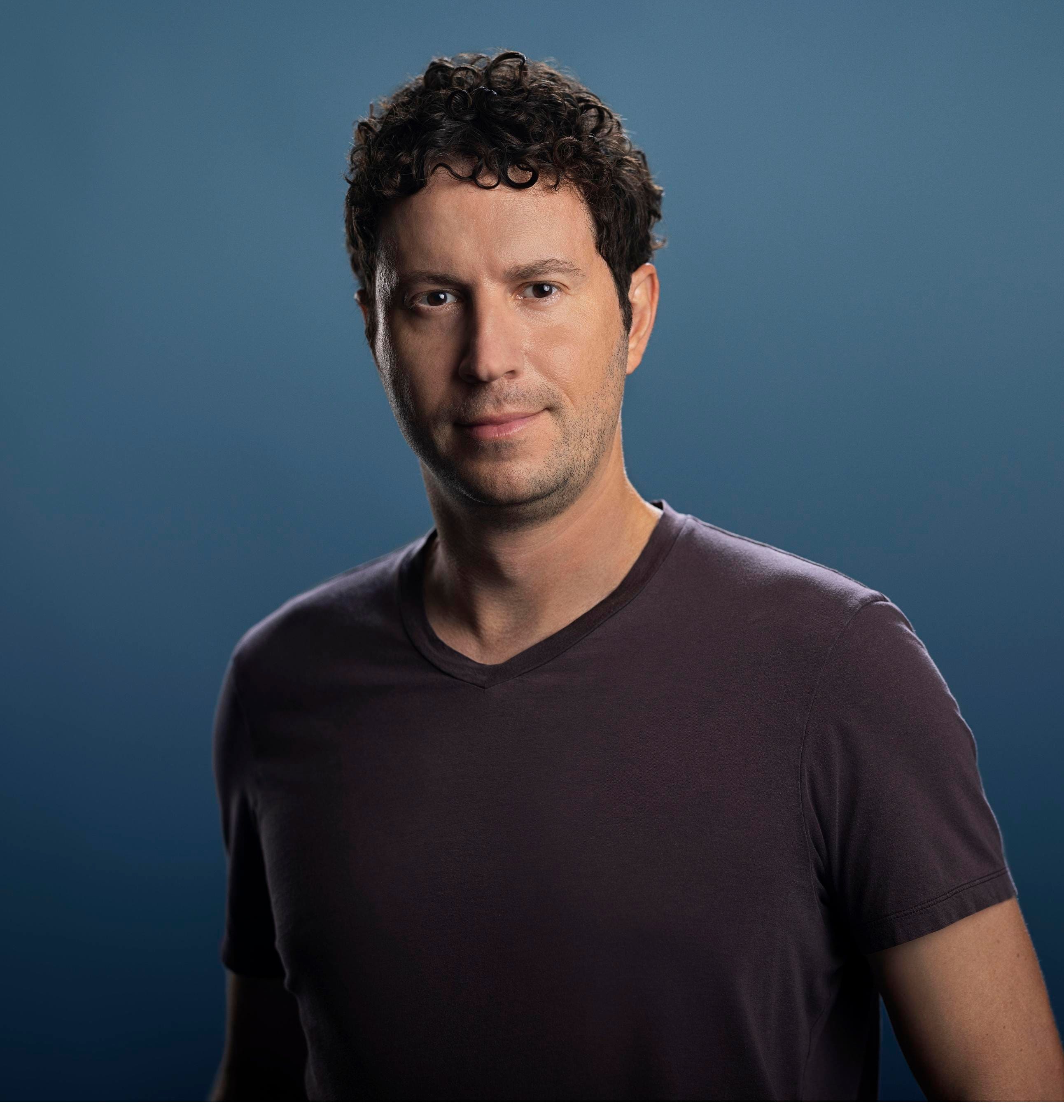
Daniel Nadler
Co-founder & CEO
Canadian-born entrepreneur with a Harvard PhD; previously founded Kensho Technologies (financial-analytics firm acquired by S&P Global in 2018). Co-founded OpenEvidence in 2022 and owns nearly 60% of the company; named to the 2025 TIME100 Health list.

Zachary Ziegler
Co-founder & CTO
Machine-learning researcher who did PhD work at Harvard in Alexander (Sasha) Rush's NLP lab and held an NSF Graduate Research Fellowship. Co-founded OpenEvidence in 2022 and leads its technology as CTO, reportedly owning about 10% of the company.
Key leaders
Recent hires
Jamie Davis
Director, Client Success
Previously at Meta · New York, New York, United States
Joined Jun 2026
John Hunt
First Data Scientist
Previously at Acumen, LLC · Millbrae, California, United States
Joined May 2026
Zhiyuan Yang
Senior Software Engineer
Previously at Uniswap Labs · United States
Joined May 2026